 ultimate-guide
Understanding Commercial Liability Insurance for Small Contractors
Table of Contents
- What Commercial Liability Insurance Covers for Contractors
- Why Small Contractors Need Commercial Liability Protection
- General Liability Insurance Cost for Contractors: How Premiums Are Calculated
- What Is a Certificate of Insurance for Contractors and When Do You Need One?
- Commercial General Liability vs Professional Liability: What's the Difference?
- Subcontractors vs Independent Contractors: Who Carries the Liability?
- How to File a Claim and Mitigate Risks on the Job Site
- Get a Quote for Your Contractor Liability Coverage
- Frequently Asked Questions
Last Updated: September 8, 2026
What Commercial Liability Insurance Covers for Contractors
Commercial liability insurance protects your contracting business when a third party claims your work caused bodily injury or property damage. For small contractors, understanding commercial liability insurance for small contractors starts with knowing that this policy pays for legal defense costs and settlement payments when someone sues you over an accident tied to your business operations.
The core of this coverage hinges on third-party claims. If a client trips over your extension cord and breaks their wrist, or your crew accidentally drives a nail through a hidden water pipe, your commercial general liability policy responds. It covers the injured party's medical bills and the cost to repair the damaged property, up to your policy's coverage limits.
A common misconception is that this insurance protects your own tools or employees. It does not. Your tools need an inland marine policy, and your employees need workers compensation. Commercial liability insurance exists solely to handle claims from people who are not part of your business, including clients, vendors, and members of the public.
Why Small Contractors Need Commercial Liability Protection
Most small contractors assume they are too small to be sued, yet a single job site accident can threaten the entire business. Construction sites carry inherent risk: loose materials create slip and fall hazards, power tools cause injuries, and mistakes in workmanship can damage a client's home. Without liability protection, you pay legal defense costs and any settlement out of pocket, which can easily wipe out a year of profit.
Contractual requirements often force the issue. Most general contractors and commercial property owners will not let you step on site without proof of coverage. They will ask for a certificate of insurance naming them as an additional insured before you sign the contract. Carrying your own policy is the only way to satisfy these demands and keep bidding on work.
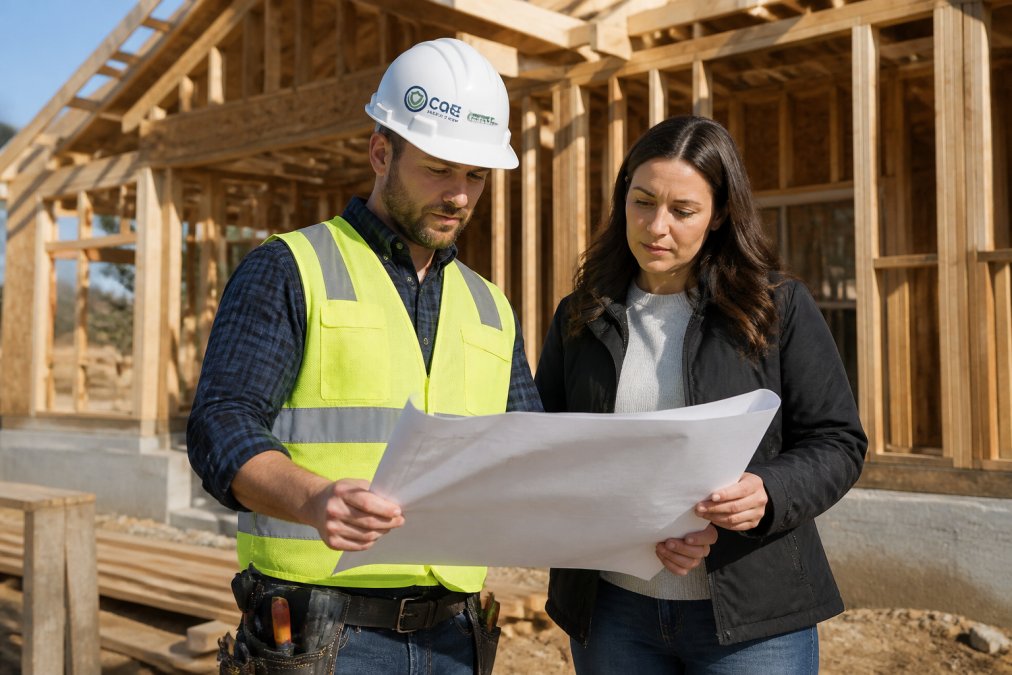
Beyond contracts, liability coverage provides financial protection that keeps your business intact when the unexpected happens. The insurance company handles the legal defense, negotiates settlements, and pays covered claims up to your limits.
General Liability Insurance Cost for Contractors: How Premiums Are Calculated
The general liability insurance cost for contractors is not a fixed number. Insurers underwrite your premium based on a blend of factors that paint a picture of your risk. Understanding the mechanics behind the price helps you make decisions that lower your annual cost.
Your trade classification is the starting point. Insurers group contractors by risk tier. Your classification code sets the base rate. High-risk trades like roofing, excavation, or demolition typically pay 1.5 to 2 times the base rate of lower-risk trades like painting or drywall installation.
Payroll and revenue are the multipliers. Your premium is calculated by applying your rate to your estimated annual payroll or gross receipts. Underestimating your payroll can trigger an audit at renewal, resulting in a surprise premium adjustment; overestimating means you pay for coverage you do not need. Project conservatively and adjust mid-term if your actuals diverge.
Your claims history follows you. Insurers pull your loss runs from the past three to five years. A single claim can increase your premium by 20% to 40% at renewal; two or more claims can push you into the nonstandard market (iii.org). The most effective cost-control strategy is preventing claims from happening in the first place.
Your coverage limits and deductible are levers you control. Raising your deductible from $500 to $2,500 can reduce your premium by 10% to 15% (independentagent.com). However, a higher deductible means you absorb more of the cost if a claim occurs. A common pattern among small contractors is to carry a $1,000 deductible and a $1 million per-occurrence limit with a $2 million aggregate. That structure satisfies most contract requirements without overpaying for limits you rarely use.
Risk mitigation is the angle most articles miss. Insurers reward documented safety practices. A written safety program, regular toolbox talks, and a clean OSHA record can qualify you for a risk-credit discount, typically 5% to 10% off your premium (osha.gov). Some carriers offer additional credits if you use subcontractors who carry their own coverage. An incident-reporting system, even for near misses, demonstrates active risk management and strengthens your negotiating position at renewal.
The practical takeaway: Your premium is a formula you can influence. Track your claims, document your safety practices, and review your classification code annually with your agent. A small contractor who invests an hour each year often saves more than the cost of a full policy.
What Is a Certificate of Insurance for Contractors and When Do You Need One?
A certificate of insurance for contractors is a standardized document that summarizes your active insurance policies, including coverage types, limits, and effective dates. It is not your policy itself, but proof that your coverage exists. Clients, general contractors, and property owners request it to verify you carry the insurance their contract requires.
You need to provide a certificate of insurance whenever a contract specifies coverage requirements, on nearly every commercial project and most residential jobs managed by a general contractor. It is typically requested during bidding, before work begins, and sometimes annually for ongoing relationships.
When a client asks to be named as an additional insured, the certificate must reflect that endorsement. An additional insured endorsement extends your liability protection to cover the client for claims arising out of your work. This is a standard risk management practice in construction, and your insurance agent can issue the updated certificate quickly once the endorsement is added.
Commercial General Liability vs Professional Liability: What's the Difference?
Commercial general liability vs professional liability comes down to the type of mistake being claimed. Commercial general liability covers physical harm and property damage from your business operations. Professional liability, also known as errors and omissions insurance, covers financial harm caused by professional advice or services that fail to meet the expected standard of care.
A contractor needs both in many situations. General liability protects you when a client slips on a wet floor at the job site. Professional liability protects you when a client claims your design-build advice led to a structural flaw that caused financial loss. The two policies respond to different types of claims and do not overlap.
The distinction matters because many small contractors mistakenly believe one policy covers everything. If you offer design services, consult on project planning, or provide any advice that clients rely on for financial decisions, professional liability coverage is worth discussing with your agent. Without it, a claim based on your professional judgment leaves you exposed.
Subcontractors vs Independent Contractors: Who Carries the Liability?
The difference between subcontractors and independent contractors determines who carries the liability for a job. A subcontractor is hired by the general contractor to perform a specific scope of work; an independent contractor operates as a separate business entity, often working directly for the property owner.
General contractors typically require subcontractors to carry their own commercial liability insurance and provide a certificate of insurance before starting work. This protects the general contractor from claims caused by the subcontractor's negligence. The subcontractor's policy is primary for their own work, though the general contractor's policy may respond if the claim involves the general contractor's supervision.
Independent contractors working directly for a property owner need their own coverage for the same reason. If your work causes damage, the property owner's insurance will not cover your liability. Your commercial general liability policy is your financial protection, and carrying it is often a condition of the contract.
How to File a Claim and Mitigate Risks on the Job Site
Filing a claim starts with prompt notification to your insurance agent. Most policies require you to report an incident "as soon as practicable," and delays can jeopardize coverage.
Step 1: Secure the scene and document everything. If someone is injured, call emergency services first. Take photos from multiple angles before anything is moved, capturing the hazard, the surrounding area, and any visible injuries or damage. Collect names and contact information from witnesses and write down your own recollection while it is fresh. This documentation matters more than any verbal explanation you give later.
Step 2: Notify your insurer, not the claimant's lawyer. Call your agent or the claims hotline on your policy. Provide the date, time, location, and a factual description of what happened. Do not admit fault, do not offer to pay for damages, and do not sign anything from the claimant. Contractors who apologize or promise to "make it right" create problems for their insurer's defense.
Step 3: Understand what the adjuster does. The insurer assigns a claims adjuster who investigates the incident, interviewing you, the claimant, and witnesses; reviewing your documentation; and examining the policy language. The adjuster determines whether the claim falls within your coverage and, if so, how much it is worth. Your cooperation is a policy condition, failing to respond can delay payment or, in extreme cases, void coverage.
Step 4: Know what happens after the adjuster's decision. If the claim is covered, the insurer handles legal defense and settlement negotiations. If denied, you have the right to appeal and to involve your state's insurance department. Claims with clear documentation and prompt reporting are resolved faster and more favorably.
Step 5: Use the claim as a learning event. After the claim closes, review what happened. Was the incident caused by a missing safety protocol? A training gap? A subcontractor's shortcut? Adjust your processes accordingly. A single claim does not have to define your premium trajectory, but a pattern of repeat incidents will.
Risk mitigation is the other half of this equation. The best claim is the one that never happens. A documented safety program is your first line of defense. Conduct weekly job site inspections using a simple checklist: cords are taped down, ladders are on stable ground, debris is contained, and personal protective equipment is worn. Hold a five-minute toolbox talk before each new task and keep a log of these talks, it demonstrates that safety is a habit, not a slogan.
Contractual risk transfer is a mitigation tactic most guides ignore. Before you start a job, review your contract for indemnification clauses. A well-drafted contract should require the party at fault to bear the cost of their negligence. If you hire subcontractors, require them to name you as an additional insured and provide a certificate of insurance before they step on site. This shifts the financial burden of their mistakes to their insurer, not yours.
A final note on the practical reality: Most small contractors will go years without filing a claim. But those who file and navigate the process well had a plan before the accident happened. Keep your policy documents accessible, know your agent's after-hours number, and store your incident-reporting checklist in your truck.
Get a Quote for Your Contractor Liability Coverage
Securing the right commercial liability coverage requires working with an agent who understands the construction industry. At Core Insurance Group, we provide personalized policies tailored to your specific trade, coverage needs, and risk profile. Our team has 30+ years of industry experience helping contractors across Oregon, Washington, California, Idaho, Utah, Arizona, Montana, and Texas navigate their insurance requirements.
We handle the details that keep your business running: fast quotes, responsive service, and clear explanations of what your policy covers and what it excludes. When you need a certificate of insurance quickly for a new contract, our team has delivered the required documentation within an hour. That responsiveness matters when a project start date is on the line.
Getting a quote is straightforward. Reach out to Core Insurance Group, discuss your operations and coverage needs, and we will identify the right policy for your business. We are backed by Farmers Insurance and committed to transparent service that protects your assets and your ability to keep working.
Frequently Asked Questions
How much liability insurance should a contractor have?
Most small contractors carry at least $1 million in general liability coverage per occurrence, with a $2 million aggregate limit. However, the right amount depends on the size of your projects and the requirements of the clients you work with. Many commercial clients and project owners require specific minimum limits before you can step on site. A $1 million policy may not be enough if you take on larger commercial projects, so review your contracts to see what limits they demand.
How much does a $1,000,000 liability insurance policy cost?
The cost of a $1 million general liability policy for a small contractor varies significantly based on your trade, annual revenue, claims history, and the states where you operate. A small contractor with a clean record in a low-risk trade might pay less than one doing roofing or excavation work. Because premiums depend on so many factors, you need a personalized quote to know your exact price. Contact Core Insurance Group for a rate specific to your business.
Do independent contractors need commercial general liability insurance?
Yes. Independent contractors face many of the same third-party risks as larger companies, including bodily injury and property damage claims. If you make a mistake that damages a client's property or someone gets hurt because of your work, you are personally responsible for those costs unless you have coverage. Additionally, most clients and general contractors will require proof of insurance before they hire you. Working without coverage puts your business and personal assets at risk.
Is general liability insurance required for small construction businesses?
General liability insurance is not mandated by federal law for most small construction businesses. However, it is almost always required in practice. Project owners, general contractors, and commercial clients typically require subcontractors to carry coverage and provide a certificate of insurance before work begins. Some states may require proof of coverage for licensing purposes. Even where it is not legally required, operating without it exposes you to significant financial risk from third-party claims.
What is the difference between commercial general liability and professional liability?
Commercial general liability covers third-party bodily injury, property damage, and advertising injury arising from your business operations. Professional liability, also known as errors and omissions insurance, covers claims of negligence, mistakes, or failure to perform professional duties. For contractors, general liability might cover property damage from your work, while professional liability could apply if your design advice or consulting services cause a financial loss for a client. Many contractors need both policies for complete protection.
Choosing the right commercial liability insurance does not have to be complicated, but it does require working with someone who understands contractors. The wrong policy leaves you exposed to claims that could end your business. Core Insurance Group offers personalized contractor liability coverage, hassle-free bonding, and responsive claims support backed by 30 years of experience. Get a quote today and secure the protection your business needs to keep growing with confidence.