
 how-to
How to Lower Homeowners Insurance Premiums
Table of Contents
- Why Your Homeowners Insurance Premium Matters
- Shop Around for Competitive Quotes
- Bundling Home and Auto Insurance Savings
- Homeowners Insurance Deductible vs Premium
- Home Insurance Discounts for Safety Features
- Maintain a Strong Credit Score and Claims History
- Review and Adjust Your Coverage Annually
- Frequently Asked Questions
Last Updated: September 20, 2026
Why Your Homeowners Insurance Premium Matters
Your homeowners insurance premium is one of your largest annual expenses. Yet most homeowners pay far more than necessary for the same coverage. The difference between a smart policy and an overpaying one can easily reach hundreds of dollars per year, thousands over a decade.
This guide shows you the specific moves that actually lower your premium without leaving you underprotected.
Shop Around for Competitive Quotes
The single biggest mistake homeowners make is staying with their current provider out of inertia. Insurance companies count on this, gradually raising rates year after year, betting you'll never compare options.
Getting quotes from multiple insurers takes about an hour and can save you hundreds annually. Here's what to do:
- Contact at least three different insurance companies
- Request quotes for identical coverage levels across all providers
- Compare not just the premium, but the deductibles and coverage limits too
- Ask about available discounts (we'll cover those below)
- Check ratings on the National Association of Insurance Commissioners to verify company reliability
When you shop around, you gain real leverage. A competitive quote from another company gives you negotiating power with your current insurer, and many will match or beat a competitor's offer. Most homeowners who compare find they can lower homeowners insurance premiums by 10-20% simply by switching to a different carrier.
Negotiating a Renewal Rate Increase
Most rate increases happen at renewal time. At this moment, you have maximum leverage to negotiate.
Step 1: Get competing quotes before your renewal date. Contact at least two other insurers and request quotes for identical coverage in writing. This gives you concrete ammunition for negotiation.
Step 2: Call your current insurer's agent and ask why your rate increased. Common reasons include replacement cost increases, area loss history changes, claims history, credit score drops, coverage limit adjustments, or the insurer's rate filing changes. Some reasons are negotiable or correctable.
Step 3: Present your competing quotes. Tell your agent: "I received a quote from [Company A] for the same coverage at $[amount]. Can you match or beat that rate?" Many agents have authority to offer retention discounts or apply additional discounts you may have missed.
Step 4: Ask about rate reduction opportunities. Even if your agent can't match a competitor's price, they may lower your renewal premium by bundling additional policies, increasing your deductible, removing unnecessary coverage, installing security upgrades, paying annually (3-5% discount), or enrolling in inspection programs.
Step 5: Know your walk-away point. If your current insurer won't match competing quotes, switch. Purchase the new policy, then cancel the old one, most insurers handle cancellation without penalty during renewal.
When Negotiation Fails
If your insurer refuses to negotiate and their renewal rate is significantly higher than competitors, switch. Rates are set by actuarial data, not relationship history. Initiate negotiation 30-45 days before your renewal date to allow time for switching without coverage gaps.
Bundling Home and Auto Insurance Savings
Bundling home and auto insurance with the same company is one of the most reliable ways to reduce costs. When you combine policies, insurers reward the loyalty with discounts typically ranging from 10-25%. Insurance companies want to be your single provider because it's easier to manage one customer with multiple policies, and they pass some efficiency back to you as a discount.
Get a quote for bundled home and auto coverage from your current insurer, ask for the discount percentage in writing, and compare that bundled rate to shopping separately. Sometimes bundling wins; sometimes shopping separately does. Always run the numbers, bundling only makes sense if the bundled rate is actually lower than your alternatives.
Homeowners Insurance Deductible vs Premium
Understanding the relationship between your deductible and your premium is critical.
Your deductible is the amount you pay out of pocket when you file a claim. Your premium is what you pay each month or year for coverage. These two numbers move in opposite directions.
Raise your deductible, and your premium drops. Lower your deductible, and your premium rises. The higher the deductible, the more risk you accept. The insurance company rewards that by charging you less.
Here's how to think about it:
- A $500 deductible means you pay $500 toward any claim. Your premium is higher.
- A $2,500 deductible means you pay $2,500 toward any claim. Your premium is lower.
The math: If raising your deductible from $500 to $2,500 saves you $300 per year, you break even after eight years of no claims. If you go ten years without filing, you've saved $3,000 net.
Most homeowners can safely handle a $1,000 or $2,500 deductible. The key is having an emergency fund. If you can't afford to pay your deductible after a loss, don't raise it.
This is where homeowners insurance deductible vs premium decisions get personal. Your comfort level matters as much as the math.
Home Insurance Discounts for Safety Features
Insurance companies charge lower premiums to homes with better safety features. The logic is simple: safer homes file fewer claims.
Installing the right upgrades can reduce your premium by 5-15%. Here are the features that matter most:
Security systems, A monitored alarm system that alerts authorities during a break-in can earn you a 5-10% discount. Ask your insurer which systems qualify. Some companies have preferred vendors.
Smoke and fire detectors, Modern interconnected smoke detectors that alert you quickly earn small discounts. Some insurers want hardwired systems rather than battery-operated ones.
Storm shutters, In areas prone to high winds or hurricanes, storm shutters can reduce your premium by 5-10%. These protect your windows and reduce damage risk.
Deadbolts and reinforced doors, Solid entry doors with deadbolts are cheaper to insure than flimsy ones. Upgrade your main entry points.
Roof condition, A newer roof (less than 20 years old) qualifies for discounts on some policies. If your roof is aging, replacing it can lower your premium and improve safety.
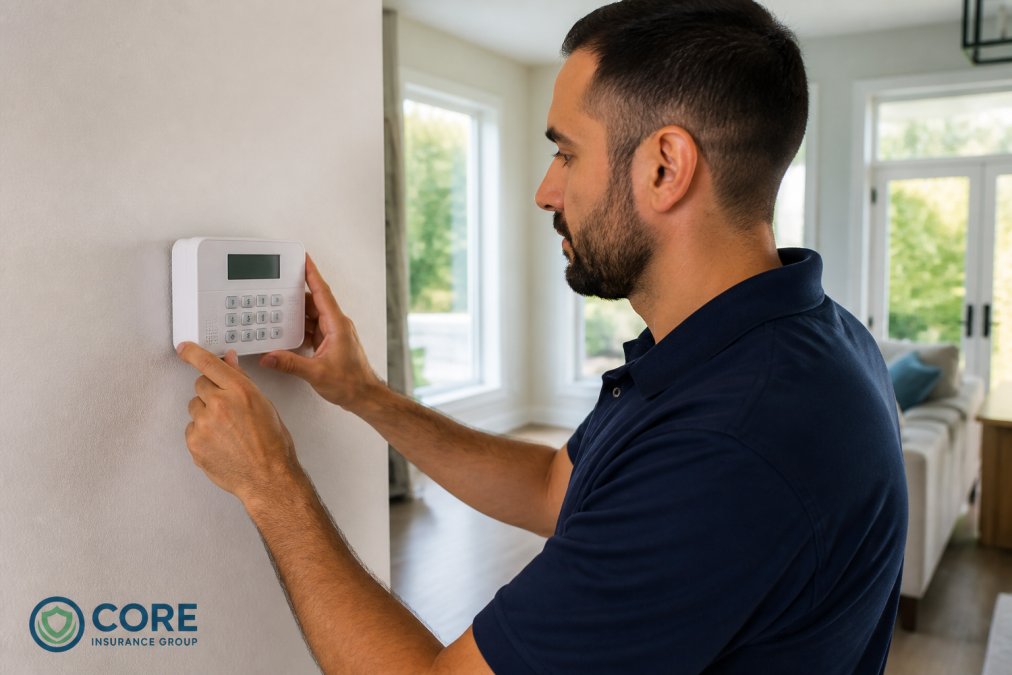
Before spending money on upgrades, call your insurer and ask which improvements they reward. Some companies offer bigger discounts for specific features than others. A $500 installation that saves you $50 per year isn't worth it. A $500 installation that saves you $100 per year makes sense.
Maintain a Strong Credit Score and Claims History
Two factors heavily influence your homeowners insurance premium: your credit score and your claims history.
Insurance companies use your credit score to predict the likelihood you'll file a claim. It's not about your creditworthiness. It's about risk behavior. People with lower credit scores statistically file more claims. So insurers charge them higher premiums.
Improving your credit score takes time, but it pays off. A jump from a 650 score to a 750 score can lower your premium by 10-15% with many insurers.
Understanding Your CLUE Report
Your claims history is equally important, and it's tracked in a document most homeowners don't know exists: your Comprehensive Loss Underwriting Exchange (CLUE) report.
How to Access and Audit Your CLUE Report
- Claims listed that you never filed
- Duplicate entries for the same claim
- Claims attributed to you that belong to a previous homeowner
- Incorrect claim amounts or dates
- Claims marked as filed when you only requested information
The Claims Filing Decision
Before filing a claim, call your insurer and ask:
- Will this claim appear on my CLUE report?
- How will it affect my renewal premium?
- How long will it stay on my record?
Review and Adjust Your Coverage Annually
Your coverage needs change over time. A policy that made sense five years ago might not fit your situation today.
Ask yourself these questions once a year:
- Have you paid off your mortgage? (You might need less coverage.)
- Have you made major home improvements? (You might need more coverage.)
- Have you removed valuable items from your home? (You might have unnecessary coverage.)
- Have your life circumstances changed? (Job changes, family changes, etc.)
Frequently Asked Questions
Does bundling home and auto insurance actually save money?
Yes. Bundling home and auto insurance with a single provider typically saves 15-25% on your overall premiums. By consolidating your policies, insurers reward your loyalty with multi-policy discounts. This approach also simplifies your billing and claims process, making it easier to manage your coverage in one place.
What is the impact of a higher deductible on my monthly premium?
Increasing your deductible directly lowers your monthly premium. For example, moving from a $500 deductible to $1,000 can reduce your premium by 10-15%, depending on your coverage limits and risk profile. However, you'll pay more out of pocket if you file a claim, so choose a deductible you can afford to cover.
How do home security systems impact insurance premiums?
Installing a monitored security system can lower your homeowners insurance premium by 5-15%. Insurers view these systems as risk mitigation tools that reduce theft and property damage. Fire-resistant materials, storm shutters, and updated electrical systems also qualify for discounts. Ask your agent which specific upgrades your insurer rewards.
What should I do if my insurance company raises my premium?
First, request a detailed explanation for the increase, it may reflect claims history, local risk assessment changes, or inflation adjustments. Review your policy to ensure your coverage limits still match your home's rebuild cost. Then shop quotes from other insurers and ask your current agent if you qualify for additional discounts. If you've made home improvements or maintained a claims-free record, use that to negotiate.
Lowering your homeowners insurance premium doesn't mean accepting lower protection. It means eliminating waste, capturing discounts, and aligning your coverage with your actual needs. Core Insurance Group works with homeowners throughout the region to find this balance. We analyze your current policy, identify hidden discounts, and compare competitive quotes to ensure you're getting the best rate for your coverage. Get a quote today and see how much you could save.