
 comparison
Compare Auto Insurance Rates: Eugene Guide
Table of Contents
- Auto Insurance Rates in Eugene: What You Need to Know
- Oregon Minimum Auto Insurance Requirements
- Factors Affecting Car Insurance Premiums
- Full Coverage vs. Liability-Only Insurance
- How to Bundle Home and Auto Insurance
- Getting Accurate Auto Insurance Quotes
- Discounts and Ways to Lower Your Premium
- Conclusion
Last Updated: August 30, 2026
Auto Insurance Rates in Eugene: What You Need to Know
When shopping for auto insurance rates in Eugene, the numbers can feel overwhelming. Your neighbor might pay half what you do for nearly identical coverage, and that gap isn't random. It comes down to how insurance companies assess risk, what coverage you choose, and which discounts you qualify for.
At Core Insurance Group, we help drivers cut through the confusion by showing exactly how rates are calculated and where you can find real savings. This guide walks you through the factors insurers consider, the minimum coverage Oregon requires, and the specific steps to compare quotes accurately.
Oregon Minimum Auto Insurance Requirements
Oregon law requires every driver to carry liability coverage: at least $25,000 in bodily injury liability per person, $50,000 total per accident, and $20,000 in property damage liability (oregon.gov). Meeting Oregon's minimum doesn't mean you're fully protected, if you cause an accident and damages exceed your limits, you could face a lawsuit for the difference. Many advisors recommend $50,000 to $100,000 per person for drivers with substantial assets.
Liability-only insurance covers the other person's damages but leaves your own vehicle unprotected. If you finance or lease your car, your lender typically requires comprehensive and collision coverage as well. These optional coverages protect your own vehicle from accidents, theft, weather, and other perils.
Factors Affecting Car Insurance Premiums
Insurance companies use detailed risk assessment based on your personal profile, driving behavior, vehicle, and claims history.
Driving Record and Claims History
Your driving record is one of the heaviest factors in your premium. A clean record signals lower risk, while an at-fault accident or speeding ticket can increase your rate significantly for three to five years. Insurance companies also view multiple claims as higher risk, even if claims weren't your fault. Conversely, going several years without claims or violations often qualifies you for safe driver discounts that reduce your rate substantially.
Age, Gender, and Credit Score
Age is a primary rating factor. Younger drivers, especially those under 25, pay significantly more because statistics show higher accident involvement (nhtsa.gov). Rates typically drop through your late 20s and 30s. Young male drivers usually pay more than young female drivers, reflecting different accident patterns by gender in certain age groups.
Your credit score affects your premium more than many drivers realize. Insurance companies use credit information to assess financial stability and predict claim behavior.
Vehicle Type, Local Driving Conditions, and Annual Mileage
The vehicle you drive significantly affects your rate. High-performance sports cars and luxury vehicles cost more to insure due to higher repair costs. Vehicles with strong safety ratings and lower theft rates qualify for better rates. In the Willamette Valley, insurers factor in exposure to local hazards like winter weather and wet road conditions. Electric vehicles increasingly qualify for lower rates due to fewer moving parts and manufacturer safety features, though specialized repair costs can be higher.
Older vehicles (10+ years) typically cost less to insure on collision and comprehensive because their actual cash value is lower. Annual mileage matters too, drivers with longer commutes have more accident exposure. If you work from home or drive infrequently, you may qualify for a low-mileage discount.
Full Coverage vs. Liability-Only Insurance
Liability-only insurance covers damage you cause to others. It's the legal minimum in Oregon and the cheapest option. If you own an older vehicle outright and have savings to cover repairs, liability-only might make financial sense.
Full coverage, typically meaning liability, comprehensive, and collision, protects your own vehicle. Comprehensive covers theft, weather, vandalism, and other non-collision events. Collision covers damage from accidents, regardless of fault. The break-even point depends on your vehicle's value, deductible choice, and risk tolerance. If your car is worth $25,000 and you'd struggle to replace it, full coverage becomes more valuable. Your lender will require full coverage as a condition of financing.
How to Bundle Home and Auto Insurance
Bundling home and auto insurance with one carrier typically saves 15 to 25 percent on your combined premium (iii.org). The discount recognizes customer loyalty and reduces administrative costs.
How Bundling Discounts Work in Oregon
When you bundle, insurers typically apply the discount to your lowest-premium policy and a smaller discount to the second policy. Oregon's insurance market is competitive, and most major carriers offer bundling discounts, though the percentage and structure varies.
Evaluating Whether Bundling Makes Financial Sense
Bundling isn't always the cheapest option. Sometimes your best auto rate comes from one company and your best home rate from another. Run the numbers before bundling:
- Get separate quotes for auto insurance from at least three carriers.
- Get separate quotes for home insurance from at least three carriers.
- Calculate your best separate total.
- Get bundled quotes from carriers offering both auto and home.
- Compare the bundled total against your best separate total.
Many drivers assume bundling saves money without running this comparison.
Local Carrier Considerations
Oregon has national carriers (State Farm, Allstate, Geico, Progressive) and regional players. When evaluating bundled quotes, consider claims handling, customer service availability, rate stability, and policy flexibility in addition to price.
After bundling, set a calendar reminder to review your quote against standalone quotes every two years. Loyalty discounts can offset bundling savings, but only if you ask for them explicitly.
Getting Accurate Auto Insurance Quotes
Getting quotes is free and takes 15 to 20 minutes per insurer. Most drivers compare three to five insurers before deciding.
What Information You'll Need
Have these details ready: driver's license information, vehicle identification number (VIN), current insurance policy, driving history details, annual mileage estimate, and desired coverage limits and deductibles.

Comparing Quotes Across Providers
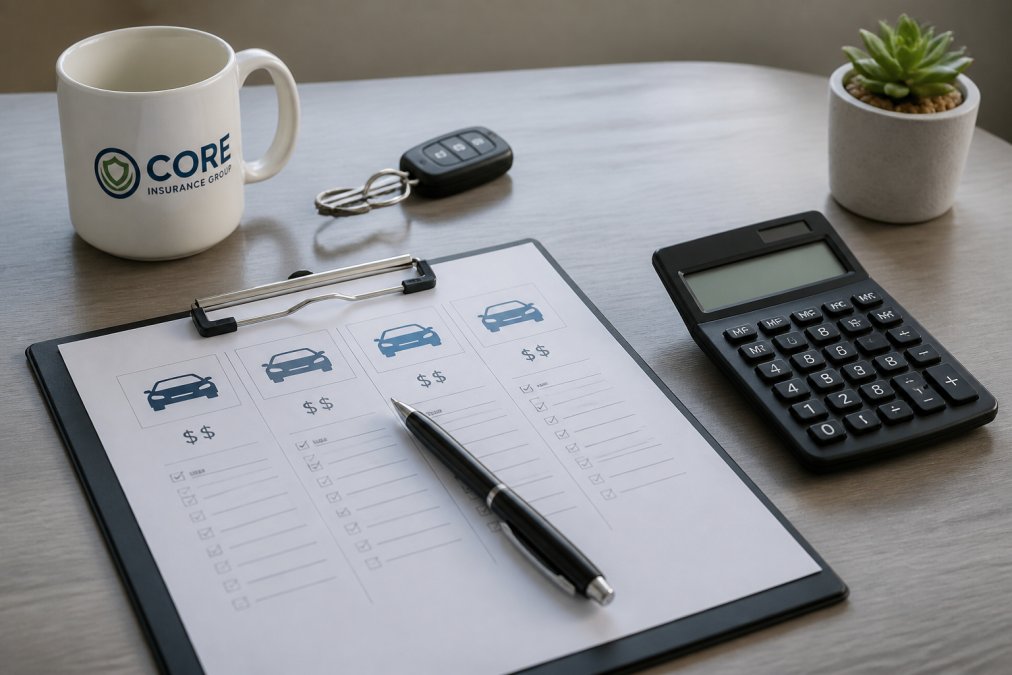
Don't just look at the bottom-line premium. Compare the actual coverage you're getting. Create a simple comparison listing the same coverage limits and deductibles across all quotes to ensure you're comparing apples to apples. Ask about discounts during the quoting process, many insurers don't automatically apply them.
| Coverage Element | Quote A | Quote B | Quote C |
|---|---|---|---|
| Liability Limits | 50/100/50 | 50/100/50 | 50/100/50 |
| Collision Deductible | $500 | $250 | $500 |
| Comprehensive Deductible | $500 | $500 | $250 |
| Annual Premium | $1,240 | $1,385 | $1,195 |
| Bundling Discount | 15% | 12% | 18% |
Discounts and Ways to Lower Your Premium
Insurance companies offer dozens of discounts. Safe driver discounts reward clean driving records. Bundling discounts combine auto and home insurance for 15 to 25 percent savings. Good student discounts apply to drivers under 25 with a 3.0+ GPA. Defensive driving course discounts reward completion of approved safety courses. Low-mileage discounts apply if you drive fewer than 10,000 to 15,000 miles annually. Usage-based discounts use a mobile app to track driving habits. Loyalty discounts reward customers who stay with the same insurer for multiple years.
If you qualify for three discounts worth 10 percent each, they stack to reduce your premium by roughly 27 percent.
Finding the right auto insurance rates in Eugene means understanding the factors that drive your premium and the tools available to reduce it. Your driving record, vehicle choice, coverage limits, deductible, and available discounts all play a role.
Core Insurance Group specializes in helping Eugene drivers navigate these decisions. With access to multiple carriers and deep knowledge of Oregon insurance requirements, we can show you quotes that match your needs and budget. Get in touch with Core Insurance Group today for a personalized quote and discover how much you might save.
Frequently Asked Questions
What are the minimum auto insurance requirements in Oregon?
Oregon requires drivers to carry liability insurance with minimum limits of 25/50/20 (bodily injury per person, bodily injury per accident, property damage). This is the state-mandated minimum coverage. You can choose liability-only or add comprehensive and collision coverage for additional protection.
How do factors affecting car insurance premiums differ for each driver?
Your premium depends on your driving record, age, gender, credit score, vehicle type, annual mileage, and claims history. Drivers with at-fault accidents or violations typically pay higher rates. Younger drivers and those with poor credit scores often face higher premiums. Your vehicle's make, model, and safety features also affect the rate. Zip code rating matters too, your location determines risk assessment.
Does bundling home and auto insurance save money in Oregon?
Yes, bundling typically offers significant savings. Most insurers provide multi-policy discounts when you combine auto and home insurance. The discount amount varies by provider and your specific coverage needs. Bundling also simplifies policy management and renewal. Contact a local agent to get a quote on bundled coverage and see your exact savings potential.
How often should I compare my auto insurance rates?
Review your rates annually or whenever your circumstances change, new vehicle, moving, marriage, or major life events. Your driving record, claims history, and risk assessment can shift, affecting your premium. Policy renewal dates are ideal times to shop around. Comparing quotes every 12 months helps ensure you're getting competitive coverage and not overpaying for the same protection.
This article was written using GrandRanker
Frequently Asked Questions
What are the minimum auto insurance requirements in Oregon?
Oregon requires drivers to carry liability insurance with minimum limits of 25/50/20 (bodily injury per person, bodily injury per accident, property damage). This is the state-mandated minimum coverage. You can choose liability-only or add comprehensive and collision coverage for additional protection.
How do factors affecting car insurance premiums differ for each driver?
Your premium depends on your driving record, age, gender, credit score, vehicle type, annual mileage, and claims history. Drivers with at-fault accidents or violations typically pay higher rates. Younger drivers and those with poor credit scores often face higher premiums. Your vehicle's make, model, and safety features also affect the rate. Zip code rating matters too—your location determines risk assessment.
Does bundling home and auto insurance save money in Oregon?
Yes, bundling typically offers significant savings. Most insurers provide multi-policy discounts when you combine auto and home insurance. The discount amount varies by provider and your specific coverage needs. Bundling also simplifies policy management and renewal. Contact a local agent to get a quote on bundled coverage and see your exact savings potential.
How often should I compare my auto insurance rates?
Review your rates annually or whenever your circumstances change—new vehicle, moving, marriage, or major life events. Your driving record, claims history, and risk assessment can shift, affecting your premium. Policy renewal dates are ideal times to shop around. Comparing quotes every 12 months helps ensure you're getting competitive coverage and not overpaying for the same protection.