
 how-to
Common Reasons for Denied Home Insurance Claims
Table of Contents
- Why Home Insurance Claims Get Denied: The Big Picture
- 1. Failure to File on Time and Missed Deadlines
- 2. Non-Payment of Premiums and Lapsed Coverage
- 3. Policy Exclusions and Non-Covered Perils
- 4. Insufficient Documentation and Evidence
- 5. Lack of Property Maintenance and Wear and Tear
- 6. False Statements, Misrepresentation, and Poor Workmanship
- How to Appeal a Denied Home Insurance Claim
- Frequently Asked Questions
Last Updated: September 10, 2026
Why Home Insurance Claims Get Denied: The Big Picture
A denied home insurance claim almost always traces back to avoidable problems: missed deadlines, lapsed coverage, unclear policy language, or thin documentation. Understanding common reasons for denied home insurance claims before you file is the best way to protect your payout. Understanding common reasons for denied home insurance claims before you file is the best way to protect your payout. Most denials aren't sinister, they're procedural.
The stakes are high: when a claim is rejected, you're out a repair bill, the premiums you already paid, and possibly a second fight to reverse the decision. The good news is that nearly every reason on this list is something you can prepare for.
Denials are rarely final. You have appeal rights, statutory deadlines, and in some cases recourse when an insurer acts in bad faith. Below, we break down the eight most common reasons claims get denied, then show you how to appeal a denied home insurance claim.
1. Failure to File on Time and Missed Deadlines
The most preventable denial is a late one. Every policy sets a window for reporting a loss, and missing it gives your insurer a clean reason to reject the claim.
Two clocks usually apply: the prompt-notice requirement, often meaning contacting your insurer within days of discovering damage, and the proof of loss deadline, a formal document due within a set period after the loss.
What trips people up is the discovery rule. If you find hidden water damage months later, the clock may start when you discovered it, not when the leak began, but you have to document when you found it. A timestamped photo and a dated note to your insurer create that record.
2. Non-Payment of Premiums and Lapsed Coverage
A policy that lapsed for non-payment isn't a policy at all when the loss occurs. This is the least arguable denial on the list, and it's why premium payment discipline matters more than almost anything else.
Most carriers send a cancellation notice before terminating coverage, typically giving you a grace period to catch up. Miss that, and the policy ends. If damage happens the day after cancellation, there's no coverage to claim against, regardless of how many years you paid before.
Set up autopay if you haven't. If you're switching banks or cards, update the payment method before the next due date. A declined card during a billing cycle is enough to start the cancellation process.
3. Policy Exclusions and Non-Covered Perils
Every homeowners policy covers specific perils and excludes others. A covered peril is an event your policy explicitly protects against; an exclusion removes coverage for named events or conditions.
Standard policies typically exclude flood and earthquake damage, which require separate coverage (iii.org). Wear and tear, maintenance neglect, and construction defect are also commonly excluded because they're considered preventable or gradual, not sudden.
This is where reading your declarations page and policy jacket pays off. If your denial letter cites an exclusion, look up that exact clause. Sometimes the adjuster applied the wrong one, and that's grounds for appeal.
| Denial Reason | What Triggers It | Your Best Defense |
|---|---|---|
| Missed deadline | Late notice or proof of loss | File immediately, keep dated records |
| Lapsed policy | Unpaid premium | Autopay, confirm cancellation notices |
| Policy exclusion | Non-covered peril | Read the clause, check for misapplication |
| Thin documentation | No photos or receipts | Document before and after the loss |
4. Insufficient Documentation and Evidence
The claim with the weakest file loses. Insufficient documentation is why most denials are overturned on appeal, because the fix is entirely in your hands.
Your insurer needs to verify three things: that the loss happened, that it's covered, and what repairs cost. If any is fuzzy, the adjuster defaults to denial rather than guessing in your favor.
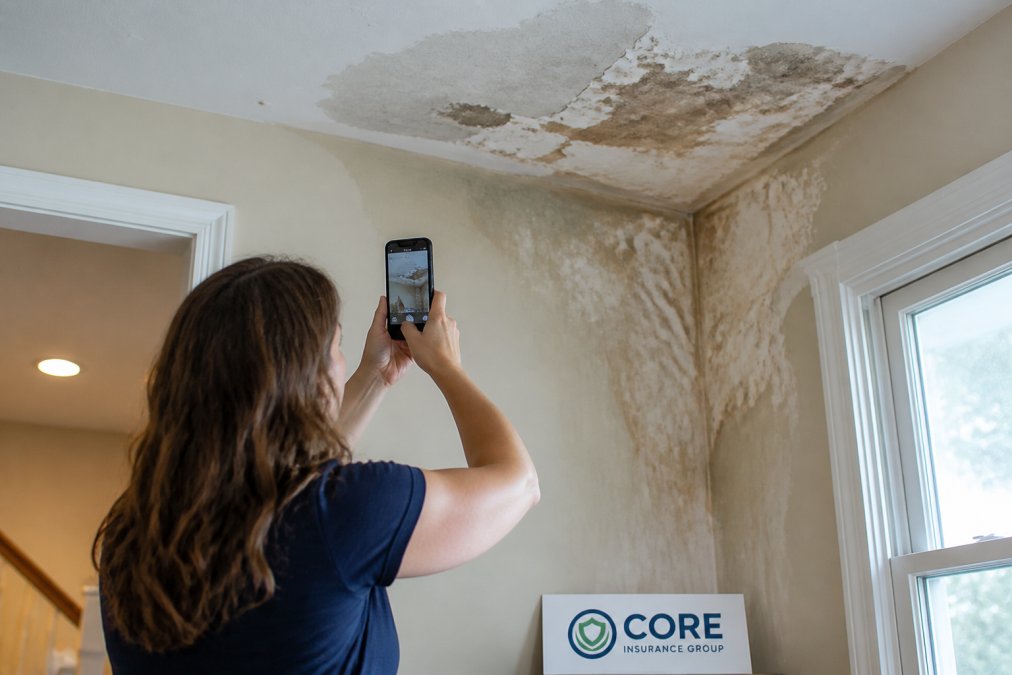
What to Photograph Before and After a Loss
Before any loss, photograph every room, closet, and major appliance, and store the images in the cloud, not just on your phone. After a loss, photograph the damage from multiple angles before you move or discard anything.
Keep receipts for major purchases and repairs. A proof of loss form backed by photos and receipts is far harder to deny than a verbal estimate. When your insurer requests documentation, respond in writing and keep a copy of everything you send.
5. Lack of Property Maintenance and Wear and Tear
Insurance covers sudden, accidental damage, not the slow decay of an unmaintained home. Wear and tear, the gradual deterioration every property sees over time, is excluded from standard coverage (iii.org). What most guides leave out is how adjusters draw that line, and the separate duty that can shrink your payout even when the loss itself is covered.
How Adjusters Separate 'Sudden' From 'Gradual'
When an adjuster inspects a loss, they're asking not just what happened but how long it took to happen. A roof that fails from a hailstorm is a covered peril; a roof that fails because it was 25 years old and never replaced is maintenance neglect. The damage assessment tries to tell the difference, and your maintenance records help your case.
The tell is in the pattern of damage. Sudden losses show fresh, localized failure, a single split pipe, a clean shingle tear from impact, a stain with a clear start date. Gradual losses show the fingerprints of time: rust scale, rot, curling or granule loss across the whole roof, repeated staining painted over. If the adjuster sees evidence the condition predated the loss window, expect a denial or a reduced payout tied to depreciation.
This is where causation gets contested. A windstorm may be the covered peril, but if the roof was already at the end of its service life, the insurer can argue the loss was inevitable and pay only depreciated value, or deny the portion attributable to age. Document the home's condition before the loss so the sudden event, not the slow decline, is the proximate cause.
Your Duty to Mitigate After a Loss
Even when a loss is covered, you have a contractual duty to mitigate, to take reasonable steps to prevent further damage after the event. Fail to do it, and the insurer can reduce or deny the portion of the claim caused by the additional damage.
A burst pipe is the classic example. The pipe failure is covered, but if you discover the leak and leave the water running for two days while waiting for the adjuster, the resulting mold and floor damage may be excluded as preventable. Reasonable mitigation means shutting off the water, tarping a damaged roof, boarding a broken window, or moving belongings out of a wet area, and keeping receipts for whatever you spend.
Mitigation is not permanent repair, you're not expected to rebuild before the adjuster arrives, just to stop the bleeding. Photograph the damage before you mitigate, then document what you did and when. Insurers routinely reimburse reasonable mitigation costs, but only if you show they were necessary and tied to the covered loss.
Keep a simple log: roof inspections, HVAC servicing, plumbing checks, and repairs. When a claim is questioned, that log shows you maintained the property, shifting the loss toward "sudden" rather than "gradual." Pair it with dated photos and mitigation receipts, and you have the two records that most often decide these disputes.
6. False Statements, Misrepresentation, and Poor Workmanship
Misrepresentation, even unintentional, can void a claim entirely. Inflating a loss estimate or describing damage inaccurately gives your insurer grounds to deny and, in serious cases, cancel the policy.
Poor workmanship and construction defect are separate issues. If a contractor's faulty installation caused the damage, your insurer may deny the claim and point you toward the contractor's liability coverage instead. That's a coverage dispute, not a dead end.
Be precise in every statement. Describe what you observed, not what you assume caused it. Let the adjuster and your documentation establish causation.
How to Appeal a Denied Home Insurance Claim
You can appeal a denied home insurance claim by requesting the denial in writing, reviewing the cited reason, and submitting a formal appeal with supporting evidence within your policy's stated timeframe. Most policies outline a specific appeals process, and many include appraisal for disputes over the amount of loss rather than coverage itself. Here is the step-by-step version, including how to tell a legitimate denial from a bad-faith one.
Step 1: Read the Denial Letter Like a Roadmap
Read your home insurance claim denial letter carefully. It should cite the specific policy provision used to deny the claim; if it doesn't, request that in writing. The letter tells you the reason, the policy clause, and usually the appeal deadline. Read it twice, then match each stated reason against your documentation. If it's vague or cites the wrong exclusion, that's your opening.
Step 2: Build a Written Record
Build your appeal around evidence, not emotion: photographs, receipts, contractor estimates, and maintenance records. Submit everything in writing and keep copies. The first denial is often reversed on the strength of documentation the adjuster never saw, not the argument. Send your appeal by a method that creates a delivery record, and note the date against the deadline in the letter.
Step 3: Know Your Two Dispute Tracks
Most policies give you two distinct paths, and picking the wrong one wastes time:
- Appraisal, for disputes over the amount of a covered loss. Both sides hire a qualified appraiser, and if they disagree, a neutral umpire decides. This is faster and cheaper than litigation and is the right track when coverage is not in question but the number is.
- Formal appeal or complaint, for disputes over coverage itself, or over how the claim was handled. This is where you challenge the cited exclusion, the causation finding, or the denial outright.
If the dispute continues, know who you're dealing with: a public adjuster works for you and is paid a percentage of your settlement, while an independent adjuster works for the insurer. A public adjuster can be worth the fee on a large, contested loss; on a small claim, the percentage may exceed what you recover.
Step 4: Escalate to Your State Insurance Regulator
If the insurer delays, lowballs, or denies a valid claim without reasonable basis, that may constitute bad faith insurance practices, and many states allow remedies beyond the claim amount (naic.org). Check your state's insurance regulator for the rules and complaint process that apply to you. Filing a complaint is free, creates a formal record, and often prompts a second look from the carrier's compliance team.
How to Tell Bad Faith From a Legitimate Denial
Not every denial is bad faith, and treating a routine coverage dispute as one can cost you credibility. The difference usually comes down to whether the insurer had a reasonable basis for its decision and followed its own procedures.
Signs a denial may cross into bad faith: a letter that misstates your policy language; refusal to provide the specific clause relied on; delays past the deadlines your policy sets; demands for documentation the insurer already has; or a settlement offer far below any reasonable repair estimate with no explanation. A legitimate denial cites a real exclusion, applies it to facts the adjuster can point to, and gives you a clear path to dispute it.
Understanding Your Home Insurance Claim Denial Letter
Frequently Asked Questions
What should I do when my home insurance denies a claim?
Start by reading your denial letter carefully to identify the specific reason. Then gather your policy documents, photos, receipts, and any repair estimates. You can file a formal appeal with your insurer, request an appraisal if the dispute is about the claim amount, or contact your state's department of insurance. Acting quickly matters because most policies and state laws set deadlines for appeals.
What are the most common reasons insurance companies deny property claims?
The most frequent reasons include filing past the deadline, lapsed premium payments, damage from a policy exclusion like flood or earthquake, insufficient documentation, maintenance neglect, and misrepresentation on the application. Wear and tear and construction defects also lead to denials because they fall outside a standard covered peril. Each reason requires a different response, so review your policy language first.
How can I effectively appeal a denied homeowners insurance claim?
Submit a written appeal that cites the specific policy language supporting your position. Include photographic evidence, contractor estimates, receipts, and a proof of loss form if required. Send it via certified mail and keep copies of everything. If the insurer upholds the denial, you can request an appraisal, file a complaint with your state insurance regulator, or consult an attorney about bad faith practices.
Does failing to maintain my home lead to claim denials?
Yes. Insurers can deny a claim when damage results from maintenance neglect, such as a leaking roof that went unrepaired or rotting wood that caused structural failure. Regular maintenance records, receipts for repairs, and inspection reports help show that you kept the property in good condition. Without that proof, an adjuster may classify the damage as wear and tear rather than a covered peril.