 ultimate-guide
Commercial Property Insurance Cost: 2026 Guide
Table of Contents
- What Is Commercial Property Insurance and Why Cost Matters
- Factors Affecting Commercial Property Insurance Rates
- Replacement Cost vs. Actual Cash Value
- What Commercial Property Insurance Covers
- How to Reduce Commercial Insurance Premiums
- Getting a Commercial Property Insurance Quote
- Conclusion
- Frequently Asked Questions
Last Updated: September 19, 2026
What Is Commercial Property Insurance and Why Cost Matters
Commercial property insurance protects the physical assets that keep your business running. It covers buildings, equipment, inventory, and other tangible property from damage due to fire, theft, weather, and other covered perils. For business owners, understanding commercial property insurance cost is essential because it directly affects your bottom line and your ability to recover from unexpected losses.
Cost matters because adequate coverage without overpaying is critical. Many business owners either underinsure their assets, risking catastrophic loss, or purchase excessive coverage that strains cash flow.
Commercial property insurance cost varies based on what you're insuring, where your business operates, and how well you manage risk. A retail shop in a low-crime area with modern fire suppression systems may pay less than a manufacturing facility in a high-risk zone with older infrastructure.
Factors Affecting Commercial Property Insurance Rates
Your commercial property insurance cost is determined by multiple interconnected factors that carriers evaluate to assess claim likelihood and loss severity. Understanding these factors helps you negotiate rates or make improvements that lower premiums.
Building characteristics and age
Building age and condition directly influence your commercial property insurance cost. Older buildings with outdated systems command higher premiums due to fire, water damage, and structural failure risk. Well-maintained buildings constructed in the last 20 years receive more favorable rates.
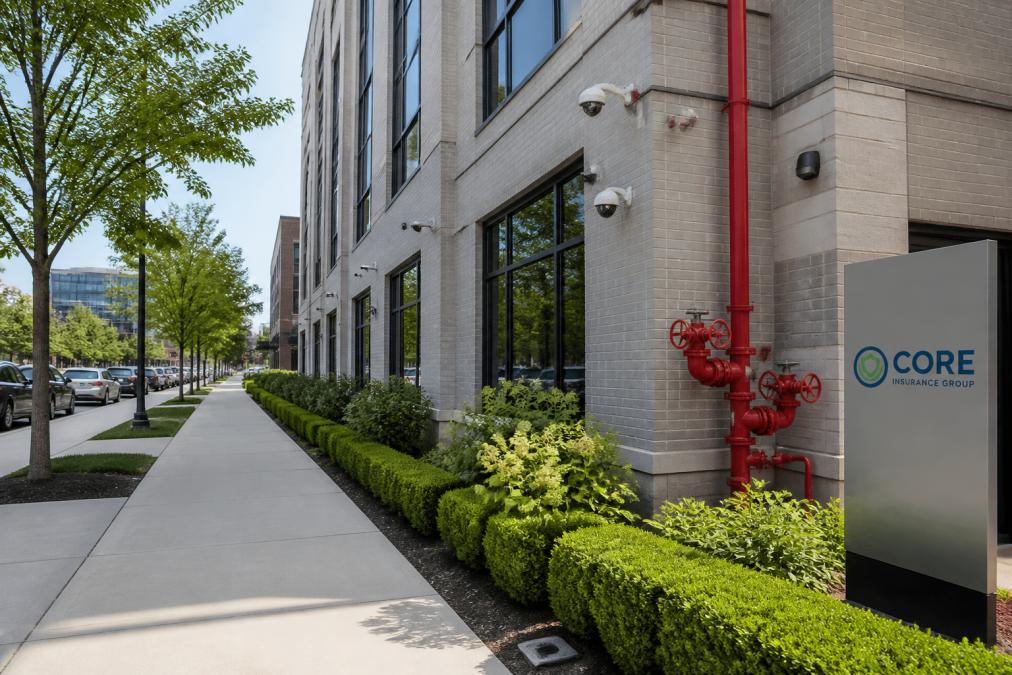
Concrete and steel structures are less expensive to insure than wood-frame construction due to fire resistance. Larger buildings have lower per-square-foot premiums. Protective devices like sprinkler systems, fire alarms, and burglar alarms can help reduce your commercial property insurance cost.
Location and regional risk
Geographic location is one of the largest drivers of commercial property insurance cost. Businesses in hurricane, earthquake, flood, or tornado-prone areas face substantially higher premiums. A retail business in Miami pays significantly more for wind and hurricane coverage than an identical business in Denver. California facilities face earthquake surcharges.
Within the same metropolitan area, location differences can influence premiums. Businesses in designated flood zones may pay higher rates than those just outside the boundary. Wildfire risk in California, Oregon, and Washington can create higher premiums in high-risk zones.
Local crime rates affect your rate; high-crime neighborhoods see higher commercial property insurance cost due to frequent theft and vandalism claims. Building codes, fire department response times, and local weather patterns also influence premiums. Two businesses in the same city can face different rates based on precise location and exposure history.
Business type and occupancy
Business type shapes your commercial property insurance cost significantly. A law office pays considerably less than a restaurant with cooking equipment and grease fire exposure, or a manufacturing facility with heavy machinery and chemical storage. Carriers classify businesses by occupancy type using standardized codes with different risk profiles.
Industry-specific cost patterns illustrate this variation:
- Retail (general merchandise): Moderate risk; average annual cost typically ranges from $500-$1,500 per $100,000 of coverage, depending on location and security measures.
- Restaurants and food service: Higher risk due to cooking equipment and grease fires; costs often run 40-60% higher than general retail for equivalent coverage limits.
- Manufacturing: Highly variable depending on equipment type and hazardous materials; costs can range from $1,000-$3,000+ per $100,000 of coverage.
- Medical and professional offices: Lower risk; often among the least expensive to insure, with costs in the $300-$800 range per $100,000 of coverage.
- Warehousing and storage: Moderate to high risk depending on contents; unheated or unmonitored warehouses face higher premiums than climate-controlled, staffed facilities.
Employee count, hours of operation, and continuous occupancy also matter. An unoccupied warehouse is riskier than one with 24/7 security and staff. Partially vacant or abandoned areas present higher theft and vandalism risk.
Replacement Cost vs. Actual Cash Value
Replacement cost is what it would cost to rebuild your property at today's prices using new materials. Actual cash value (ACV) is replacement cost minus depreciation, what your property is worth on the open market today.
A 20-year-old building worth $500,000 in actual cash value might cost $750,000 to replace. With ACV coverage, you'd receive $500,000, leaving a $250,000 shortfall. Replacement cost coverage pays the full $750,000, though your commercial property insurance cost will be higher.
Most business owners choose replacement cost coverage because it truly protects their ability to recover and continue operations. The higher premium is justified by the certainty that you'll be made whole after a loss.
What Commercial Property Insurance Covers
Commercial property insurance provides broad protection, but knowing exactly what's covered prevents surprises when you file a claim.
Building and structure coverage
This covers the physical building structure, walls, roof, foundation, built-in fixtures, and permanent improvements including attached structures like loading docks and awnings. It pays for repairs or replacement from fire, wind, hail, theft, or other covered perils.
Your coverage limit should reflect the replacement cost of your building or your lender's requirement, whichever is higher. Your commercial property insurance cost increases with higher limits, but underinsuring creates unacceptable exposure.
Business personal property and equipment
This covers movable property inside your building: furniture, equipment, inventory, computers, and machinery. It excludes vehicles and property in transit. This coverage is essential where equipment and inventory represent significant asset value.
The coverage limit should reflect the total replacement cost of everything you own that isn't permanently attached to the building. Many business owners underestimate this amount and end up underinsured.
Business interruption and additional coverages
Business interruption coverage reimburses lost income and ongoing expenses if a covered peril forces temporary closure. Without it, a three-month closure could be financially devastating even if your building is fully insured.
Additional endorsements include equipment breakdown, spoilage coverage for refrigerated inventory, and loss of rents for leased spaces. These specialized coverages address specific business needs for an additional premium.
How to Reduce Commercial Insurance Premiums
Your commercial property insurance cost isn't fixed. Several concrete actions can lower your premiums without sacrificing essential coverage. The key is understanding which improvements carriers reward most and how to document and communicate those improvements to your insurer.
Risk mitigation and security improvements
Carriers offer premium discounts for risk reduction. Installing fire suppression systems, burglar alarms, or security cameras can qualify for discounts on your commercial property insurance cost. Comprehensive systems with 24/7 professional monitoring can earn additional discounts.
The specific improvements that yield the highest discounts vary by carrier and business type, but common high-value upgrades include:
- Fire suppression systems: A wet-pipe sprinkler system typically earns a 10-20% discount. Dry-pipe systems (used in unheated spaces) earn 5-10%. Carriers view these as the single most effective loss-prevention tool.
- Burglar alarms and monitored security: Professional monitoring (not just local alarms) can reduce theft-related premiums by 10-15%.
- Security cameras with recording capability: Modern camera systems with cloud storage or on-site recording earn 5-10% discounts, particularly for retail and high-value inventory businesses.
- Deadbolts and reinforced doors: Upgraded door hardware and reinforced entry points earn 3-5% discounts for retail locations.
- Roof upgrades: Replacing an old roof with impact-resistant materials (Class 4 rated) can reduce wind and hail premiums by 10-20%, especially in hurricane or hail-prone regions.
Regular maintenance matters significantly. Documented maintenance records, electrical upgrades, roof replacement, and modern HVAC installation demonstrate active risk management and earn lower rates.
Claims history and loss prevention
Claims history profoundly impacts your commercial property insurance cost. Multiple claims in three to five years result in significantly higher premiums. A single major claim can increase rates.
Bundling and deductible strategies
Bundling multiple policies with one carrier can yield discounts. Commercial property, general liability, and workers' compensation together may earn discounts on your commercial property insurance cost. Some carriers offer discounts for additional coverage lines.
Policy review and rate shopping
Review your commercial property insurance cost annually, especially if your business has expanded, relocated, upgraded equipment, or improved security. Many owners miss opportunities to reduce costs or adjust coverage by keeping the same policy for years.
Getting a Commercial Property Insurance Quote
Obtaining an accurate quote requires detailed information about your property and business operations. Here's what to expect in the process.
| Coverage Type | Typical Purpose | Impact on Cost |
|---|---|---|
| Building Structure | Repairs to physical building | Higher limit = higher premium |
| Business Personal Property | Equipment and inventory | Higher limit = higher premium |
| Business Interruption | Lost income during closure | Adds 10-20% to base premium |
| Equipment Breakdown | Mechanical/electrical failure | Adds 5-10% to base premium |
Conclusion
Commercial property insurance cost is a significant business expense, but it's one you can control through informed decisions about coverage and risk management. The businesses that pay the least aren't always the ones with the lowest premiums, they're the ones with the right coverage limits, active risk mitigation, and bundled policies.
Frequently Asked Questions
What factors have the biggest impact on commercial property insurance cost?
Building age, construction type, location, business occupancy, and loss history are primary cost drivers. Properties in high-risk areas, older buildings, and businesses with previous claims typically pay higher premiums. Security features, fire protection systems, and maintenance records can reduce costs. Your insurance carrier evaluates these through a property appraisal and risk assessment to calculate your annual premium.
What's the difference between replacement cost and actual cash value coverage?
Replacement cost reimburses the full expense to rebuild or replace damaged property at current prices, regardless of the item's age. Actual cash value pays replacement cost minus depreciation. For example, a 10-year-old roof might cost $15,000 to replace but have an actual cash value of $8,000 after depreciation. Replacement cost typically costs more but provides better protection for business assets.
How can I lower my commercial property insurance premiums?
Implement risk mitigation strategies like upgrading fire suppression systems, installing security measures, maintaining detailed loss history records, and improving building maintenance. Bundle commercial policies for multi-policy discounts. Increase your deductible to reduce annual premiums. Work with an insurance professional who understands your industry to ensure you're not over-insured and to identify available discounts you may qualify for.
Is commercial property insurance mandatory for business owners?
Commercial property insurance is not legally required, but most lenders and landlords require it as a condition of financing or leasing. It's essential for protecting your business assets and ensuring business continuity after property damage or loss. Even without a lender requirement, the financial risk of uninsured property damage makes it a critical investment for most businesses.