 listicle
Best Small Business Insurance Providers Oregon
Table of Contents
- Top Small Business Insurance Providers in Oregon
- Quick Comparison Table
- General Liability Insurance Requirements for Oregon Businesses
- Understanding Workers' Compensation Insurance Oregon
- Commercial Property Insurance Cost and Coverage Explained
- How to Choose the Right Small Business Insurance Policy
- Local Agent vs. Digital Broker: Which Works Best for You
- Frequently Asked Questions
Last Updated: August 31, 2026
Top Small Business Insurance Providers in Oregon
Small business owners in Oregon must choose between national carriers with deep resources and local agencies that understand regional business nuances. The best providers excel in three areas: understanding your specific industry risks, delivering effective claims processes, and offering pricing that reflects actual value.
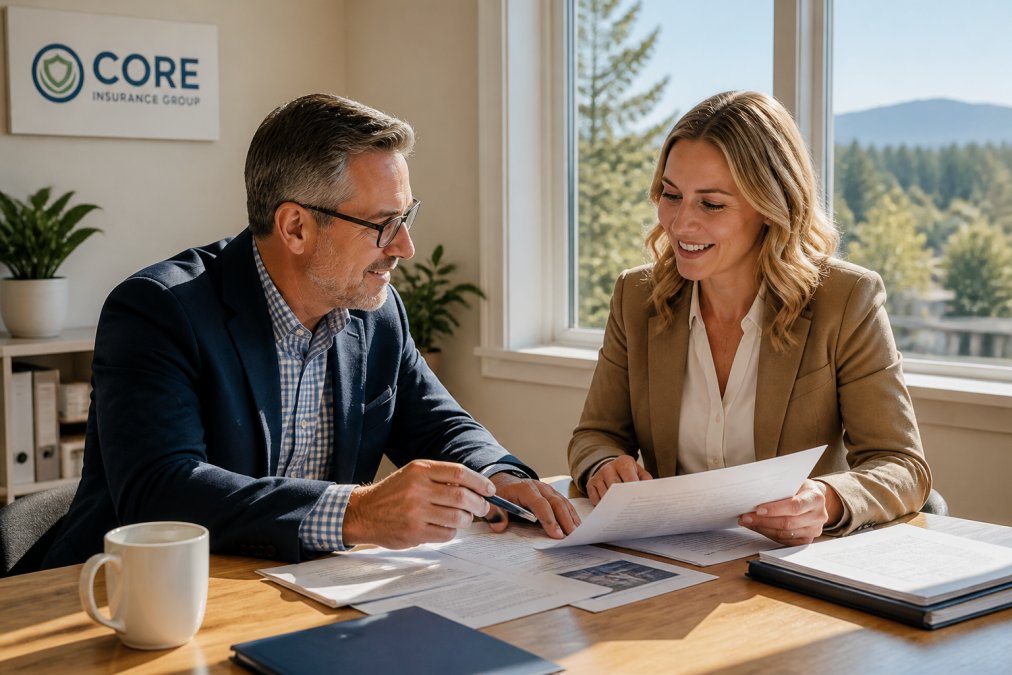
The providers reviewed below represent the strongest options currently available to Oregon businesses. Each brings different strengths, some excel at digital convenience, others prioritize personalized service and local expertise.
Core Insurance Group
Core Insurance Group combines local Eugene-based expertise with Farmers Insurance backing. They specialize in personalized policies tailored to your actual risks, particularly for construction, contracting, professional services, and retail operations.
Their standout features include hassle-free bonding for contractors, fast quotes, and responsive service from a team with 30+ years of industry experience.
The limitation: pricing requires a quote rather than an online calculator. However, this reflects their strength, willingness to dig into your specific situation.
Best for: Oregon business owners wanting personalized service and local expertise, particularly contractors and professional service firms needing surety bonds.
Pros:
- Backed by Farmers Insurance for financial stability
- Local expertise throughout Oregon
- Personalized policies tailored to your business
- Fast quotes and responsive service
- Hassle-free bonding for contractors
Cons:
- Pricing requires direct contact
- Limited to Oregon and surrounding states
The Hartford
The Hartford specializes in small business with Business Owner's Policies (BOPs) bundling property, general liability, and business interruption coverage. For Oregon businesses, they offer competitive pricing and straightforward claims handling.
Their advantage is specialization: general liability, workers' compensation, professional liability, and commercial auto integrate into coherent packages. The 24/7 digital access to services, document management, and real-time claims status updates means you're not dependent on business hours.
Best for: Small to medium-sized Oregon businesses seeking comprehensive bundled coverage.
Pros:
- Competitive pricing for BOPs
- Wide variety of customizable products
- Strong claims handling reputation
- 24/7 digital access to services
Cons:
- Pricing not transparent online
- May require additional coverage for specialized risks
Progressive Commercial
Progressive Commercial dominates commercial auto insurance. If your business operates vehicles, they've built their platform around that need. They also offer general liability, workers' compensation, professional liability, and cyber insurance add-ons.
Their 24/7 specialized claims adjusters are valuable if you have a fleet or multiple vehicles.
Best for: Oregon businesses with commercial vehicles, fleets, or specialized transportation needs.
Pros:
- Industry-leading commercial auto expertise
- Customizable policies across multiple coverage types
- 24/7 specialized claims adjusters
- Cyber insurance available as add-on
Cons:
- Pricing requires quote
- More focused on commercial auto than other coverage types
State Farm
State Farm's strength is their network of local agents throughout Oregon. Their Business Owner's Policies work well for standard small business risks, and commercial liability umbrella policies provide additional protection beyond BOP limits.
The limitation is transparency, coverage options vary by individual agent, and pricing isn't available online.
Best for: Oregon small business owners who value personalized agent relationships.
Pros:
- Local agents provide personalized service
- Wide variety of customizable coverage
- Strong industry reputation and stability
- Understands local business needs
Cons:
- Pricing not transparent; requires agent contact
- Coverage options vary by individual agent
Liberty Mutual
Liberty Mutual offers comprehensive coverage, general liability, commercial property, business interruption, commercial auto, and workers' compensation. Their Business Owner's Policies often provide decent value, and their risk management resources help prevent claims.
They work primarily through independent agents in Oregon, so pricing and service quality depend on your local agent.
Best for: Small businesses seeking Fortune 100 stability with customizable coverage across multiple protection types.
Pros:
- Comprehensive product lineup
- Strong risk management resources
- BOP often cost-effective
- Financial stability of large carrier
Cons:
- Works primarily through independent agents
- Pricing requires quotes; varies by agent
Hiscox
Hiscox specializes in small business with tailored general liability and professional liability coverage for consulting, IT services, creative agencies, and contractors. Their worldwide coverage applies to U.S. work, and fast online quotes with dedicated claims representatives streamline the process. Starting prices for contractors begin around $101 per month.
Their limitation: focus on liability coverage rather than physical property insurance.
Best for: Professional service firms, consultants, IT companies, and contractors in Oregon seeking specialized liability coverage.
Pros:
- Specializes in small business with tailored policies
- Worldwide coverage for U.S. work
- Fast online quotes and dedicated claims reps
- Competitive pricing for contractors and professionals
Cons:
- Limited focus on physical property coverage
- Pricing varies significantly by industry
biBERK
biBERK operates direct-to-consumer, allowing you to quote and purchase online without an agent. Part of Berkshire Hathaway Insurance Group, they offer instant Certificate of Liability Insurance upon purchase and cyber insurance bundled with professional liability.
The trade-off is clear: you lose personalized agent guidance, and claims processing may be slower than agent-backed carriers.
Best for: Oregon small businesses comfortable buying insurance online, particularly those needing workers' compensation or professional liability with cyber coverage.
Pros:
- Direct-to-consumer model reduces costs
- Instant online quotes and certificate issuance
- Backed by Berkshire Hathaway financial stability
- Cyber insurance bundled with professional liability
Cons:
- No personalized agent support
- Customer service for claims may be slower than agent-backed carriers
Quick Comparison Table
| Provider | Best For | Standout Feature | Service Model |
|---|---|---|---|
| Core Insurance Group | Local expertise and bonding | Personalized policies + Farmers backing | Local agent |
| The Hartford | Bundled coverage | Comprehensive BOP + 24/7 digital access | National carrier |
| Progressive Commercial | Commercial vehicles | Fleet insurance specialization | National carrier |
| State Farm | Agent relationships | Local customization | Local agent network |
| Liberty Mutual | Risk management resources | Workplace safety guidance | Independent agents |
| Hiscox | Professional liability | Industry-tailored coverage | Online + support |
| biBERK | Cost-conscious buyers | Instant certificates online | Direct-to-consumer |
General Liability Insurance Requirements for Oregon Businesses
General liability insurance protects your business when a customer or third party claims you caused bodily injury or property damage. While not always legally mandated in Oregon, it's essential for most operations, especially when contracts require it.
What general liability covers: medical expenses, legal defense costs, property damage claims, and personal injury claims. What it doesn't cover: injuries to your own employees (workers' compensation), damage to your own property, or professional mistakes (professional liability).
Oregon contractors and construction businesses face particular exposure. One injury or property damage claim can cost tens of thousands. Your client's general contractor liability won't protect you, you need your own policy.
Coverage limits matter significantly. A basic policy offering $1 million sounds substantial until a serious claim approaches that limit. Many Oregon businesses carry umbrella policies for additional protection above their general liability limits.
The claims process with reputable providers typically involves notifying your carrier promptly, providing incident documentation, and cooperating with their investigation. Most carriers assign a claims adjuster within 24-48 hours for significant claims.
Understanding Workers' Compensation Insurance Oregon
Workers' compensation is mandatory in Oregon if you have employees. Oregon Revised Statutes (ORS) Chapter 656 governs the system, and the State Accident Insurance Fund (SAIF) serves as Oregon's public insurer (oregon.gov). Private carriers like The Hartford, Progressive Commercial, and Liberty Mutual also write workers' compensation, giving you genuine choice.
What workers' compensation covers: medical treatment for work-related injuries, temporary disability benefits during recovery, permanent disability benefits for lasting impairment, and vocational rehabilitation if the employee can't return to their previous job.
Cost depends on your industry classification, payroll, and claims history. A construction company pays significantly more than a consulting firm with the same payroll due to higher injury risk. Your experience modifier adjusts your premium based on whether your claims are better or worse than your industry average.
Oregon requires employers to report serious injuries to SAIF or your private carrier within specific timeframes (oregon.gov). Delays can affect benefits and may result in penalties.
Carriers provide safety resources, training recommendations, and hazard assessments. Using these resources reduces claims and premiums over time.
Commercial Property Insurance Cost and Coverage Explained
Commercial property insurance protects your physical assets: buildings, equipment, inventory, and fixtures. Unlike general liability, it covers your own losses from fire, theft, weather, and other covered perils.
Cost depends on what you're insuring, location, protection systems, and claims history. A retail storefront has different exposure than a warehouse. A building with modern fire suppression costs less to insure than one without.
Coverage limits should reflect actual replacement cost. If your building costs $500,000 to rebuild, insuring it for $300,000 leaves you underprotected. Business interruption coverage, included in many BOPs, protects your income if a covered loss forces temporary closure, often more valuable than property coverage itself.
Deductibles typically range from $500 to $5,000 or higher. Higher deductibles lower premiums but increase out-of-pocket costs if a loss occurs.
Oregon's weather patterns create specific considerations. Winter storms damage roofs and cause water damage. Wildfire risk varies by location. Earthquake coverage is separate from standard policies and worth evaluating in seismic zones.
How to Choose the Right Small Business Insurance Policy
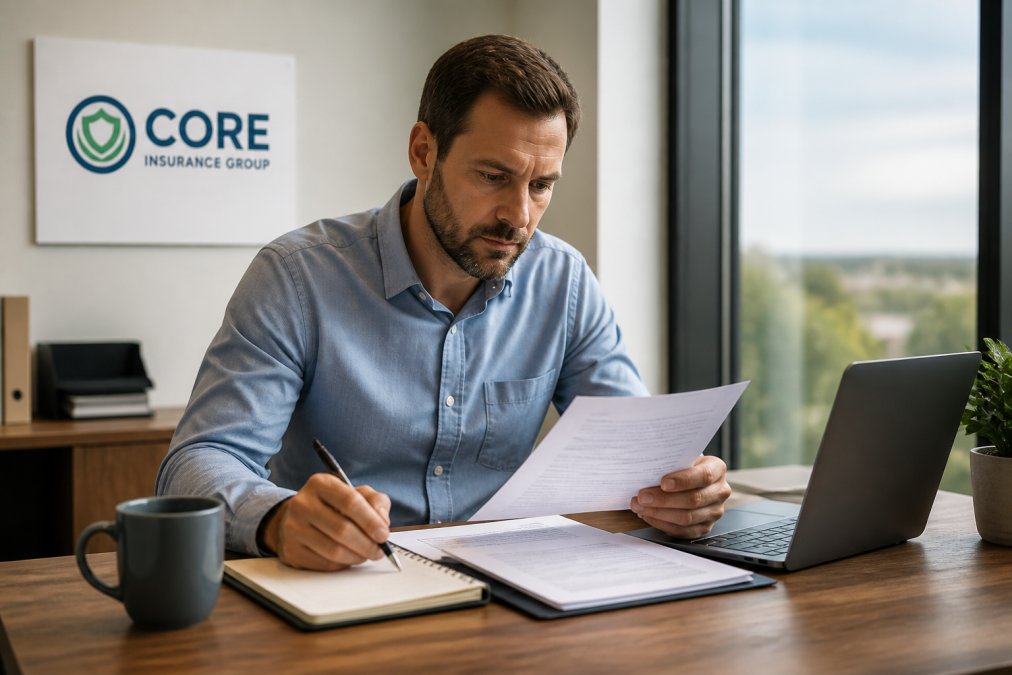
Choosing insurance becomes manageable by breaking it into steps: identify your actual risks, understand what coverage addresses each risk, compare providers, and establish a review cycle as your business changes.
Start by listing your specific business risks. A construction company faces different exposure than a consulting firm. Your industry, location, number of employees, annual revenue, and whether you rent or own your space shape what you need.
General liability is nearly universal. Workers' compensation is mandatory if you have employees in Oregon. Beyond those two, your needs diverge. Professional liability matters if you provide advice or services. Commercial property matters if you own equipment, inventory, or a building. Commercial auto matters if you operate vehicles.
Get quotes from multiple providers. Core Insurance Group provides personalized quotes reflecting your specific situation. The Hartford and Progressive Commercial offer online quoting for faster comparison. biBERK provides instant quotes but less personalized guidance.
When comparing quotes, examine coverage limits, deductibles, inclusions and exclusions, and claims handling. A cheaper policy means nothing if it leaves critical gaps.
Ask about discounts for bundling policies, maintaining good safety records, completing safety training, or having claims-free years. Local agencies can identify discounts you might not find independently.
Review your coverage annually. As your business grows, insurance needs change. A business growing from three to fifteen employees needs different workers' compensation coverage. A consulting firm adding a physical office needs commercial property insurance.
Local Agent vs. Digital Broker: Which Works Best for You
Local agents like Core Insurance Group and State Farm provide personalized service. They learn your business, understand specific risks, and customize coverage in ways digital platforms can't match. When you have a claim, you're calling someone who knows you.
The downside is transparency and speed. You can't instantly compare pricing online, and you're dependent on agent availability and expertise.
Digital brokers like biBERK offer speed and transparency. You get instant quotes, immediate policy issuance, and no middleman markup. For straightforward coverage needs, this is efficient. The trade-off is personalization, if you have complex needs or unusual risks, you're on your own.
Progressive Commercial and The Hartford split the difference with both agent and digital options.
The honest answer: the right choice depends on your business complexity and comfort with self-service. A simple retail operation might do fine with a digital broker. A construction company with multiple projects, subcontractors, and bonding needs benefits from a local agent understanding the industry.
Many Oregon businesses use both, getting digital quotes for baseline comparison, then working with a local agent to ensure nothing is missed and to get personalized claims support.
Choosing the best small business insurance provider requires matching your specific business needs with the right carrier and service model. Core Insurance Group combines local expertise with personalized service and Farmers Insurance backing, making them an excellent choice for Oregon businesses seeking comprehensive protection and responsive support. Their 30+ years of industry experience, fast quotes, and hassle-free bonding for contractors address gaps many small business owners struggle with.
Get a quote from Core Insurance Group and see how their personalized approach compares to national carriers. You'll quickly understand whether local expertise and responsive service matter for your business, or whether a purely digital option better suits your needs.
Frequently Asked Questions
Q: What types of coverage do most small business insurance providers offer in Oregon?
A: Most small business insurance providers in Oregon offer general liability, commercial property, workers' compensation, and professional liability coverage. Many bundle these into a Business Owner's Policy (BOP) for convenience. The specific coverage available depends on your industry and business structure. General liability protects against third-party bodily injury and property damage claims, while commercial property covers your buildings, equipment, and inventory. Workers' compensation is mandatory for most Oregon employers with employees.
Q: Is workers' compensation insurance mandatory for all businesses in Oregon?
A: Oregon requires most businesses with employees to carry workers' compensation insurance. However, sole proprietors and partners without employees may be exempt. Agricultural employers, domestic workers, and certain other classifications have specific rules. The State Accident Insurance Fund (SAIF) is Oregon's not-for-profit workers' compensation provider, though you can also purchase coverage from private insurers. Check with your provider or the Oregon Department of Consumer and Business Services to confirm your specific requirements.
Q: How does commercial property insurance cost vary for small businesses?
A: Commercial property insurance cost depends on your building's age, construction type, location, replacement value, deductible amount, and claims history. Businesses in higher-risk areas or with older structures typically pay more. Your industry and the type of equipment or inventory you store also affect pricing. Most providers require a detailed quote based on your specific property details. Bundling commercial property with other coverages like general liability through a BOP often results in better rates than purchasing policies separately.
Q: What makes Core Insurance Group different from other insurance agencies in Oregon?
A: Core Insurance Group combines local expertise with backing from Farmers Insurance, offering personalized policies tailored to your unique business needs. The team prioritizes transparent, simple service and delivers fast quotes with responsive support. With 30+ years of industry experience and 100+ clients served, they understand the specific risks Oregon businesses face. Customers consistently praise their thorough explanation of options, quick turnaround on documentation, and personal attention to detail.
Q: Should I work with a local agent or use an online insurance broker?
A: Local agents offer personalized service, face-to-face consultation, and deep knowledge of your specific business and local market conditions. They can advocate for you during claims and adjust coverage as your business grows. Online brokers and digital-first providers typically offer faster quotes, lower overhead costs, and 24/7 accessibility. The right choice depends on your preference for personal interaction versus convenience. Many small business owners benefit from a hybrid approach: getting quotes online for comparison, then working with a trusted local agent for final policy customization and claims support.
This article was written using GrandRanker
Frequently Asked Questions
Q: What types of coverage do most small business insurance providers offer in Oregon?
A: Most small business insurance providers in Oregon offer general liability, commercial property, workers' compensation, and professional liability coverage. Many bundle these into a Business Owner's Policy (BOP) for convenience. The specific coverage available depends on your industry and business structure. General liability protects against third-party bodily injury and property damage claims, while commercial property covers your buildings, equipment, and inventory. Workers' compensation is mandatory for most Oregon employers with employees.
Q: Is workers' compensation insurance mandatory for all businesses in Oregon?
A: Oregon requires most businesses with employees to carry workers' compensation insurance. However, sole proprietors and partners without employees may be exempt. Agricultural employers, domestic workers, and certain other classifications have specific rules. The State Accident Insurance Fund (SAIF) is Oregon's not-for-profit workers' compensation provider, though you can also purchase coverage from private insurers. Check with your provider or the Oregon Department of Consumer and Business Services to confirm your specific requirements.
Q: How does commercial property insurance cost vary for small businesses?
A: Commercial property insurance cost depends on your building's age, construction type, location, replacement value, deductible amount, and claims history. Businesses in higher-risk areas or with older structures typically pay more. Your industry and the type of equipment or inventory you store also affect pricing. Most providers require a detailed quote based on your specific property details. Bundling commercial property with other coverages like general liability through a BOP often results in better rates than purchasing policies separately.
Q: What makes Core Insurance Group different from other insurance agencies in Oregon?
A: Core Insurance Group combines local expertise with backing from Farmers Insurance, offering personalized policies tailored to your unique business needs. The team prioritizes transparent, simple service and delivers fast quotes with responsive support. With 30+ years of industry experience and 100+ clients served, they understand the specific risks Oregon businesses face. Customers consistently praise their thorough explanation of options, quick turnaround on documentation, and personal attention to detail.
Q: Should I work with a local agent or use an online insurance broker?
A: Local agents offer personalized service, face-to-face consultation, and deep knowledge of your specific business and local market conditions. They can advocate for you during claims and adjust coverage as your business grows. Online brokers and digital-first providers typically offer faster quotes, lower overhead costs, and 24/7 accessibility. The right choice depends on your preference for personal interaction versus convenience. Many small business owners benefit from a hybrid approach: getting quotes online for comparison, then working with a trusted local agent for final policy customization and claims support.