 listicle
5 Best Car Insurance for Young Drivers
Table of Contents
- Quick Comparison: Top Car Insurance Companies for Young Drivers
- 1. State Farm: Best for Safe Driving Rewards
- 2. GEICO: Best Rates for Budget-Conscious Teens
- 3. Travelers: Most Affordable Full Coverage Option
- 4. Nationwide: Best for Multi-Policy Bundling
- 5. American Family Insurance: Best Variety of Discounts
- Average Cost of Car Insurance for Young Drivers
- How to Lower Car Insurance Premiums for Teens
Last Updated: August 26, 2026
Quick Comparison: Top Car Insurance Companies for Young Drivers
Finding affordable car insurance as a young driver in Oregon comes down to choosing the right company, qualifying for discounts, and proving you're a safe driver. Young drivers face higher premiums than experienced drivers, but several major insurers offer programs that reward safe driving, good grades, and driver training completion.
This guide covers five companies offering competitive rates and meaningful discounts for young drivers in Oregon.
| Company | Key Strength | Best For | Notable Feature |
|---|---|---|---|
| State Farm | Safe driving rewards | Teens with clean records | Steer Clear® program |
| GEICO | Budget-friendly rates | Cost-conscious drivers | DriveEasy telematics |
| Travelers | Lowest full coverage cost | Full coverage seekers | Competitive pricing |
| Nationwide | Multi-policy bundling | Families with multiple policies | SmartRide® program |
| American Family Insurance | Widest discount variety | Students and volunteers | MilesMyWay usage-based |
1. State Farm: Best for Safe Driving Rewards
State Farm's Steer Clear® program is designed for drivers under 25. Participants complete online defensive driving modules, then use a mobile app to track driving for 30 days. Safe drivers receive discounts at renewal.
State Farm also offers Drive Safe & Save™, which monitors actual driving behavior and tracks hard braking, rapid acceleration, and driving times. Safe drivers can earn discounts up to 30% at renewal (peer-reviewed research).
The Good Student Discount applies to full-time students maintaining a B average or higher (3.0+ GPA) and stacks with other offers. For a teen in Oregon with full coverage, State Farm's average annual premium is around $4,296, reducible significantly with discounts.
Pros:
- Multiple discount opportunities for young drivers
- Emphasis on safe driving education
- Steer Clear program targets new drivers under 25
- Competitive rates for teens with clean records
Cons:
- Average premiums without discounts remain relatively high
- Requires active participation in programs to maximize savings
2. GEICO: Best Rates for Budget-Conscious Teens
GEICO's pricing for teens in Oregon averages around $4,128 per year for full coverage. Their DriveEasy telematics program rewards good driving with discounts, focusing on rewarding safe habits rather than penalizing bad ones. Discounts can be up to 25% for low-risk drivers.
GEICO's Good Student Discount applies to full-time students with a B average or higher and stacks with other discounts. Their digital tools make quotes and policy management straightforward for young drivers preferring online interaction.
Pros:
- Among the lowest base rates for teen drivers in Oregon
- DriveEasy offers meaningful discounts for safe driving
- Strong digital tools for quotes and policy management
- Good Student Discount stacks with other offers
Cons:
- Base rates still relatively high without discounts
- DriveEasy requires consistent safe driving to maximize savings

3. Travelers: Most Affordable Full Coverage Option
Travelers consistently ranks as a competitive option for full coverage for young drivers in Oregon, with average annual premiums around $3,168.
Travelers maintains strong customer satisfaction ratings despite competitive costs, suggesting they don't cut corners on service quality. Their strategy is straightforward: offer competitive base rates without necessarily requiring participation in monitoring programs or complex discount stacking.
For a young driver whose primary concern is affordability, Travelers deserves serious consideration.
Pros:
- Competitive average cost for full coverage for young drivers in Oregon
- High customer satisfaction ratings
- Straightforward coverage options
- Competitive pricing without requiring telematics participation
Cons:
- Fewer advertised discounts for young drivers compared to competitors
- Less emphasis on young-driver-specific programs

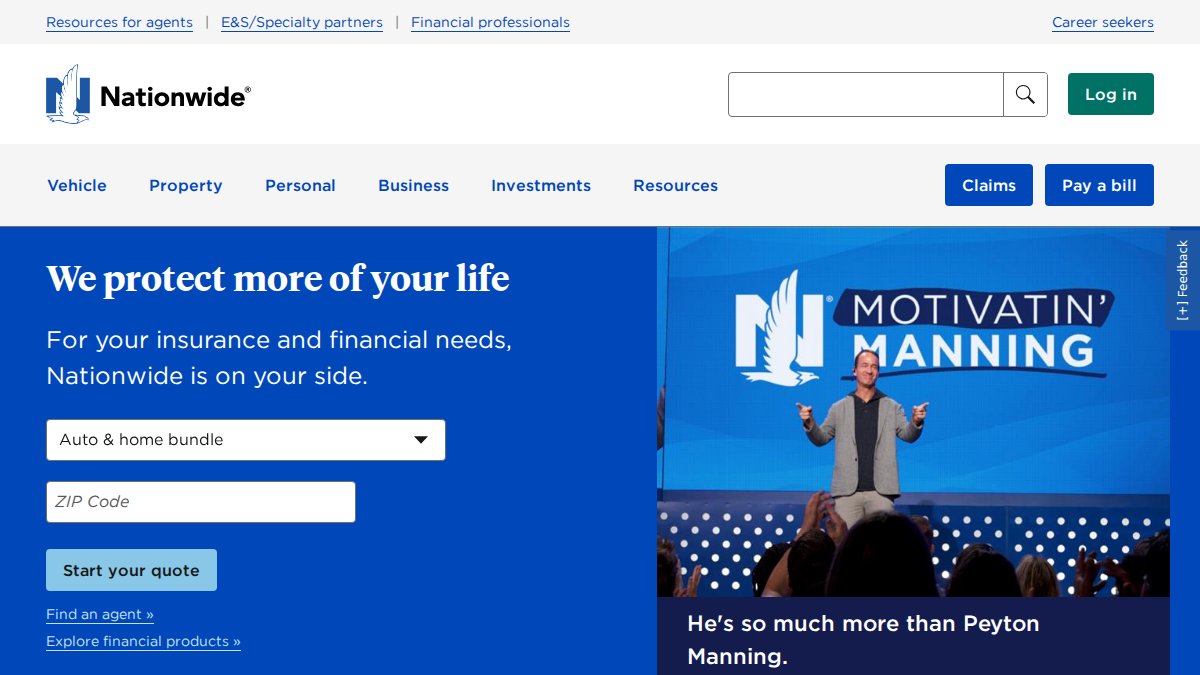
4. Nationwide: Best for Multi-Policy Bundling
Nationwide's strength lies in bundling. If your family has multiple policies, bundling home and auto together generates significant savings. Their SmartRide® program adds another layer of potential discounts for safe driving.
The Good Student Discount applies to full-time students aged 16-24 with a B average or better. Nationwide also offers Accident Forgiveness as an optional feature, preventing rate increases after your first at-fault accident.
Nationwide's average annual premium for teens in Oregon runs around $7,836 per year. However, when factoring in multi-policy bundling, the effective cost per policy drops considerably.
Pros:
- Strong multi-policy bundling discounts
- SmartRide program offers substantial discounts for safe driving
- Accident Forgiveness available as optional add-on
- Good Student Discount for teens maintaining grades
Cons:
- Base premiums higher than some competitors
- Bundling discounts required to make pricing competitive
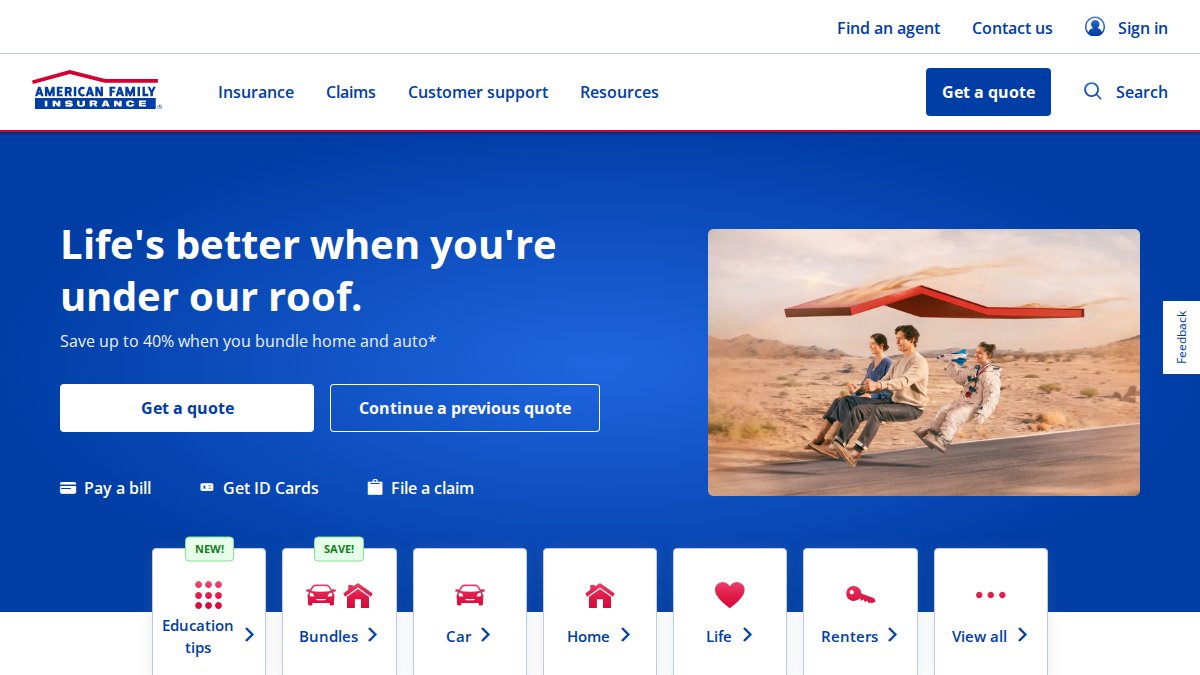
5. American Family Insurance: Best Variety of Discounts
American Family Insurance offers multiple discount options, with an average annual premium for full coverage around $2,181 per year.
The Good Student Discount applies to full-time students up to age 25 with a 3.0 GPA or higher. The Away at School Discount applies to students under 25 attending college more than 100 miles from home. The Young Volunteer Discount rewards drivers under 24 who complete 40+ hours of volunteer work annually, a unique offering.
MilesMyWay is their usage-based program for low-mileage drivers. If you drive fewer miles than average, this program can generate substantial savings.
Pros:
- Extensive variety of discounts targeting different young driver situations
- MilesMyWay program valuable for low-mileage drivers
- Young Volunteer Discount unique in the market
Cons:
- Average cost to add a teen can still be substantial without discounts
- Limited availability (19 states, though Oregon is included)
Average Cost of Car Insurance for Young Drivers
Young drivers in Oregon pay significantly more than experienced drivers. The range from these five carriers spans approximately $2,000 to $7,800 per year for full coverage, depending on the company and driver's situation.
Young drivers statistically have more accidents and traffic violations, so insurers price accordingly (nhtsa.gov). Full coverage (collision and comprehensive plus liability) costs substantially more than liability-only coverage. Discounts are substantial, a young driver with good grades, clean driving record, and safe driving program participation can reduce premiums by 30-40%.
The difference between the cheapest and most expensive option on this list can be significant. Getting multiple quotes takes time and could save you thousands per year.
How to Lower Car Insurance Premiums for Teens
Enroll in a Telematics or Usage-Based Program
Telematics programs monitor actual driving behavior through a smartphone app or plug-in device, tracking hard braking, rapid acceleration, speeding, and driving times. Safe drivers earn discounts up to 30% at renewal.

State Farm's Steer Clear program combines education with monitoring. GEICO's DriveEasy focuses on rewards. Nationwide's SmartRide tracks behavior. American Family's MilesMyWay targets low-mileage drivers. Choose the program aligning with your situation.
Maintain Good Grades for Student Discounts
The Good Student Discount requires maintaining a B average (3.0 GPA or higher) as a full-time student. The discount typically ranges from 5-15%, depending on the carrier.
For a young driver whose premium is $4,000 per year, a 10% Good Student Discount saves $400 annually. Over four years, that's $1,600 in savings.
Complete a Driver Training Course
Nearly every carrier offers a discount for completing an approved driver education or defensive driving course, typically 5-10%. Most courses can be completed online in 4-8 hours for $20-50. If your discount saves $400-600 per year, the course pays for itself in the first month.

Choosing the Right Policy for Your Situation
If you're a new driver focused on learning safe habits: State Farm's Steer Clear program combines education with monitoring, teaching defensive driving rather than just penalizing mistakes.
If cost is your primary concern: Travelers offers competitive base rates for full coverage. GEICO's rates are also competitive. Get quotes from both for your specific situation.
If your family is bundling policies: Nationwide's multi-policy discounts can make them competitive despite higher base rates.
If you have good grades, volunteer work, or drive low mileage: American Family's variety of discounts means you likely qualify for multiple savings.
If you want a telematics program but aren't sure about monitoring: GEICO's DriveEasy focuses on rewards rather than penalties.
Get quotes from at least two or three carriers. The online quote process takes 15-20 minutes per carrier and provides specific numbers based on your age, driving record, vehicle, and location within Oregon.
Why Core Insurance Group Matters for Young Drivers
Finding the right car insurance for a young driver isn't just about getting the cheapest quote. It's about getting coverage that fits your situation and having an agent who understands young driver challenges.
Core Insurance Group, backed by Farmers® Insurance, specializes in personalized insurance solutions for families throughout Oregon. An agent can help you understand which discounts you qualify for, explain coverage option differences, and ensure you're not paying for unnecessary coverage.
For young drivers in Oregon, Core Insurance Group offers competitive rates backed by the Farmers® network, personalized policies tailored to your situation, and responsive service when you need it.
Key Takeaways
Young drivers in Oregon have meaningful options for affordable car insurance. State Farm, GEICO, Travelers, Nationwide, and American Family Insurance each offer competitive rates and discount programs for young drivers.
The difference between the cheapest and most expensive option can be significant. Getting multiple quotes takes time and could save you thousands per year.
Telematics programs offer substantial discounts (up to 30%) for safe driving. Good grades qualify you for 5-15% discounts from nearly every carrier. Driver training courses cost $20-50 and generate discounts that pay for themselves in the first month.
Choosing the right carrier means understanding your priorities. Core Insurance Group can help you navigate these options and find coverage that fits your situation. Get a quote today.
=== FAQ ANSWERS (audit these too, same rules) ===
[1] Q: What insurance company has the best rates for young drivers? A: Travelers and GEICO consistently offer competitive rates for young drivers in Oregon. Travelers is reported as a very competitive option for full coverage. However, the best rate depends on individual factors like driving record, location, and eligibility for discounts. State Farm, GEICO, and Nationwide all offer strong discount programs that can significantly reduce premiums for safe drivers and good students. Get quotes from multiple companies to compare actual rates for your situation.
[2] Q: How can young drivers lower their insurance premiums in Oregon? A: Young drivers can reduce premiums through several strategies: maintain a good academic record (B average or higher) to qualify for good student discounts, enroll in telematics programs like DriveEasy, Drive Safe & Save, or SmartRide to earn discounts for safe driving habits, complete a certified driver training course for additional discounts, bundle policies with family members, and ask about discounts for low mileage. Staying claims-free and traffic violation-free is essential, as accidents and violations significantly increase insurance costs for young drivers.
[3] Q: What are the minimum insurance requirements in Oregon for young drivers? A: Oregon requires all drivers to carry liability insurance with minimum coverage limits of 25/50/20: $25,000 bodily injury per person, $50,000 bodily injury per accident, and $20,000 property damage per accident (oregon.gov). Additionally, Oregon mandates Personal Injury Protection (PIP) with a minimum of $15,000 per person and Uninsured/Underinsured Motorist coverage of $25,000 per person / $50,000 per accident. These are state-mandated minimums for financial responsibility. However, most insurers and financial advisors recommend higher coverage limits, especially for young drivers who may pose higher risk. Many families choose full coverage (collision and comprehensive) when financing or leasing a vehicle, as lenders typically require it.
[4] Q: Is full coverage necessary for young drivers in Oregon? A: Full coverage is required if the vehicle is financed or leased, but optional if owned outright. Full coverage includes collision and comprehensive protection, protecting against accidents, theft, and weather damage. For young drivers, full coverage is often recommended because they statistically have higher accident rates. While full coverage increases premiums, the financial protection against costly repairs or replacement typically outweighs the added cost. Liability-only coverage meets legal minimums but leaves the driver responsible for damage to their own vehicle.
[5] Q: How does a young driver's record affect car insurance costs? A: A clean driving record is crucial for affordable insurance. Young drivers with accidents, traffic violations, or claims face significant premium increases. Even minor violations can raise rates by 10-40%, while at-fault accidents may increase premiums by 25-100% depending on severity. Some insurers offer accident forgiveness as an optional feature that prevents rate increases after a first at-fault accident. Maintaining a clean record through safe driving is the most effective way to keep insurance costs low and demonstrates responsibility to insurers.
Frequently Asked Questions
Q: What insurance company has the best rates for young drivers?
A: Travelers and GEICO consistently offer competitive rates for young drivers in Oregon. Travelers is reported as a very competitive option for full coverage. However, the best rate depends on individual factors like driving record, location, and eligibility for discounts. State Farm, GEICO, and Nationwide all offer strong discount programs that can significantly reduce premiums for safe drivers and good students. Get quotes from multiple companies to compare actual rates for your situation.
Q: How can young drivers lower their insurance premiums in Oregon?
A: Young drivers can reduce premiums through several strategies: maintain a good academic record (B average or higher) to qualify for good student discounts, enroll in telematics programs like DriveEasy, Drive Safe & Save, or SmartRide to earn discounts for safe driving habits, complete a certified driver training course for additional discounts, bundle policies with family members, and ask about discounts for low mileage. Staying claims-free and traffic violation-free is essential, as accidents and violations significantly increase insurance costs for young drivers.
Q: What are the minimum insurance requirements in Oregon for young drivers?
A: Oregon requires all drivers to carry liability insurance with minimum coverage limits of 25/50/20: $25,000 bodily injury per person, $50,000 bodily injury per accident, and $20,000 property damage per accident. Additionally, Oregon mandates Personal Injury Protection (PIP) with a minimum of $15,000 per person and Uninsured/Underinsured Motorist coverage of $25,000 per person / $50,000 per accident. These are state-mandated minimums for financial responsibility. However, most insurers and financial advisors recommend higher coverage limits, especially for young drivers who may pose higher risk. Many families choose full coverage (collision and comprehensive) when financing or leasing a vehicle, as lenders typically require it.
Q: Is full coverage necessary for young drivers in Oregon?
A: Full coverage is required if the vehicle is financed or leased, but optional if owned outright. Full coverage includes collision and comprehensive protection, protecting against accidents, theft, and weather damage. For young drivers, full coverage is often recommended because they statistically have higher accident rates. While full coverage increases premiums, the financial protection against costly repairs or replacement typically outweighs the added cost. Liability-only coverage meets legal minimums but leaves the driver responsible for damage to their own vehicle.
Q: How does a young driver's record affect car insurance costs?
A: A clean driving record is crucial for affordable insurance. Young drivers with accidents, traffic violations, or claims face significant premium increases. Even minor violations can raise rates by 10-40%, while at-fault accidents may increase premiums by 25-100% depending on severity. Some insurers offer accident forgiveness as an optional feature that prevents rate increases after a first at-fault accident. Maintaining a clean record through safe driving is the most effective way to keep insurance costs low and demonstrates responsibility to insurers.
This article was written using GrandRanker
Frequently Asked Questions
Q: What insurance company has the best rates for young drivers?
A: Travelers and GEICO consistently offer competitive rates for young drivers in Oregon. Travelers is reported as a very competitive option for full coverage. However, the best rate depends on individual factors like driving record, location, and eligibility for discounts. State Farm, GEICO, and Nationwide all offer strong discount programs that can significantly reduce premiums for safe drivers and good students. Get quotes from multiple companies to compare actual rates for your situation.
Q: How can young drivers lower their insurance premiums in Oregon?
A: Young drivers can reduce premiums through several strategies: maintain a good academic record (B average or higher) to qualify for good student discounts, enroll in telematics programs like DriveEasy, Drive Safe & Save, or SmartRide to earn discounts for safe driving habits, complete a certified driver training course for additional discounts, bundle policies with family members, and ask about discounts for low mileage. Staying claims-free and traffic violation-free is essential, as accidents and violations significantly increase insurance costs for young drivers.
Q: What are the minimum insurance requirements in Oregon for young drivers?
A: Oregon requires all drivers to carry liability insurance with minimum coverage limits of 25/50/20: $25,000 bodily injury per person, $50,000 bodily injury per accident, and $20,000 property damage per accident. Additionally, Oregon mandates Personal Injury Protection (PIP) with a minimum of $15,000 per person and Uninsured/Underinsured Motorist coverage of $25,000 per person / $50,000 per accident. These are state-mandated minimums for financial responsibility. However, most insurers and financial advisors recommend higher coverage limits, especially for young drivers who may pose higher risk. Many families choose full coverage (collision and comprehensive) when financing or leasing a vehicle, as lenders typically require it.
Q: Is full coverage necessary for young drivers in Oregon?
A: Full coverage is required if the vehicle is financed or leased, but optional if owned outright. Full coverage includes collision and comprehensive protection, protecting against accidents, theft, and weather damage. For young drivers, full coverage is often recommended because they statistically have higher accident rates. While full coverage increases premiums, the financial protection against costly repairs or replacement typically outweighs the added cost. Liability-only coverage meets legal minimums but leaves the driver responsible for damage to their own vehicle.
Q: How does a young driver's record affect car insurance costs?
A: A clean driving record is crucial for affordable insurance. Young drivers with accidents, traffic violations, or claims face significant premium increases. Even minor violations can raise rates by 10-40%, while at-fault accidents may increase premiums by 25-100% depending on severity. Some insurers offer accident forgiveness as an optional feature that prevents rate increases after a first at-fault accident. Maintaining a clean record through safe driving is the most effective way to keep insurance costs low and demonstrates responsibility to insurers.